News & insights

Akila and FPT Welcome Hauts-de-France Delegation in Tokyo to Strengthen Franco-Japanese Partnerships in Digital Transformation

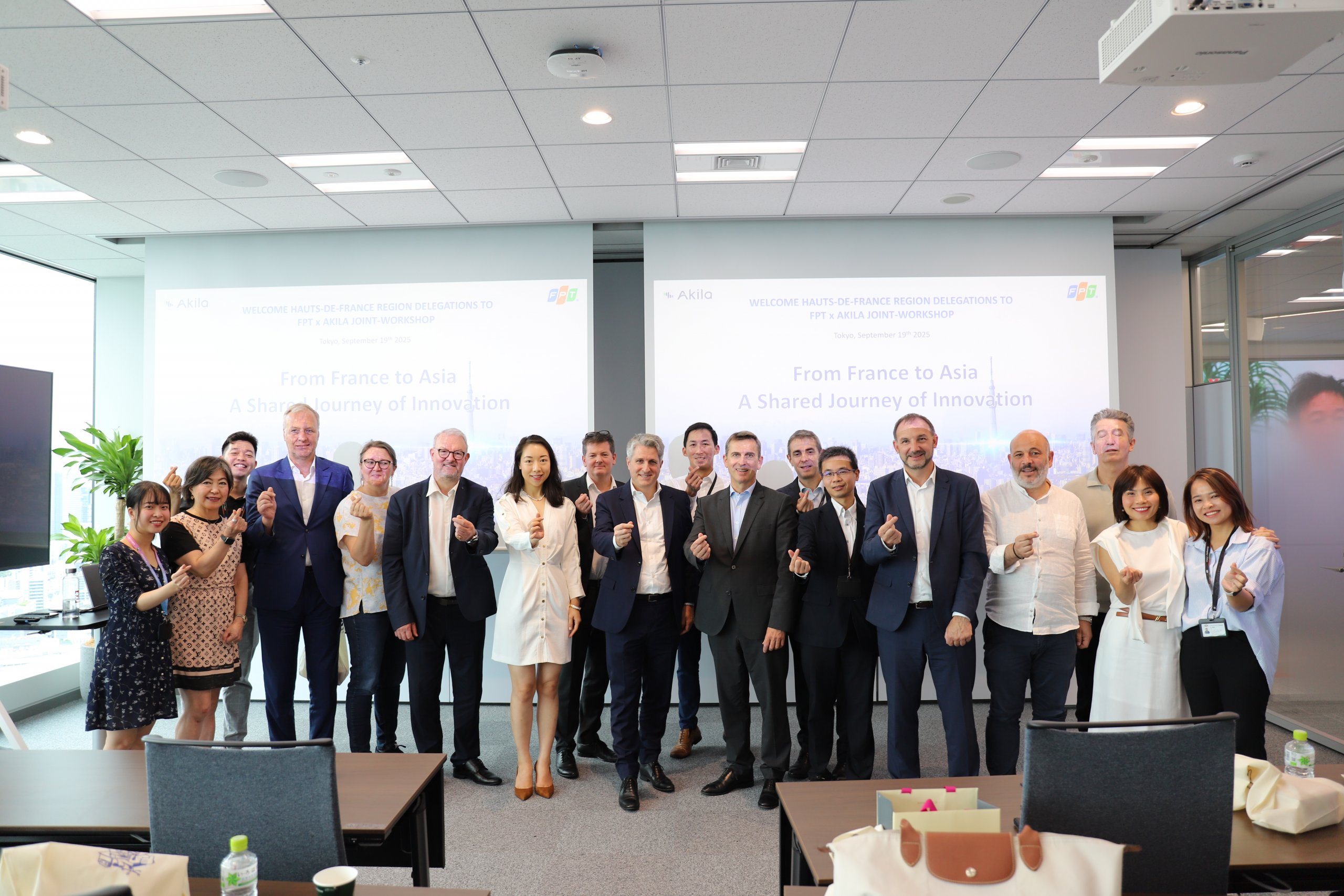
Akila, the digital twin and AI platform of Aden Group, together with its strategic partner FPT, had the honor of welcoming a high-level delegation of French companies and public institutions from the Hauts-de-France region at FPT’s Tokyo office.

The delegation, representing one of France’s most dynamic and industrially significant regions, included leaders from EDF, Lesaffre, Yamaha, Decathlon, Nord France Invest, and several leading universities. Their visit underscored the growing importance of cross-border cooperation between France and Japan in innovation, energy transition, and advanced digital solutions.

The session was opened by Mr. Tanihara Toru, Chairman of FPT Japan, followed by Mr. Fabien Roudier, DXG Japan Team Lead, who presented the growth trajectory and strategic ambitions of FPT in Japan and worldwide. With more than 5,000 collaborators in Japan, FPT has established itself as a trusted technology partner for Japanese corporations and multinationals alike, delivering cutting-edge digital transformation solutions. In France, FPT is also recognized as a major partner of Airbus and other global leaders.

During the event, the delegation was introduced to Akila, which generated significant interest among participants. Akila is rapidly expanding its partnership with FPT in Japan and beyond, with a shared ambition to deploy cognitive digital twins that unify data, optimize energy use, reduce carbon emissions, and enhance performance across complex assets and districts.

This meeting was a unique opportunity to reinforce the collaboration between Akila and FPT, and to connect with some of the most innovative companies and institutions from France. We look forward to building on this momentum with more joint initiatives and announcements in the near future.

The event highlighted not only the strategic alignment between France and Japan in digital innovation but also the growing role of partnerships like Akila and FPT in shaping sustainable, efficient, and intelligent infrastructure solutions worldwide.

Latest news
News & insights

Why Chiller-Side Optimization is Key for HVAC Efficiency

Heating, ventilation, and air conditioning (HVAC) systems are the backbone of building comfort, but they’re also some of the largest energy consumers in commercial buildings. Inefficient operation can drive up energy bills and carbon emissions, making optimization a priority for building managers and sustainability teams alike.

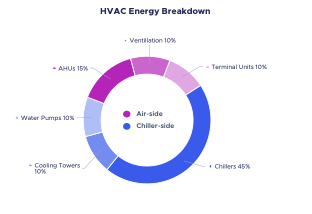
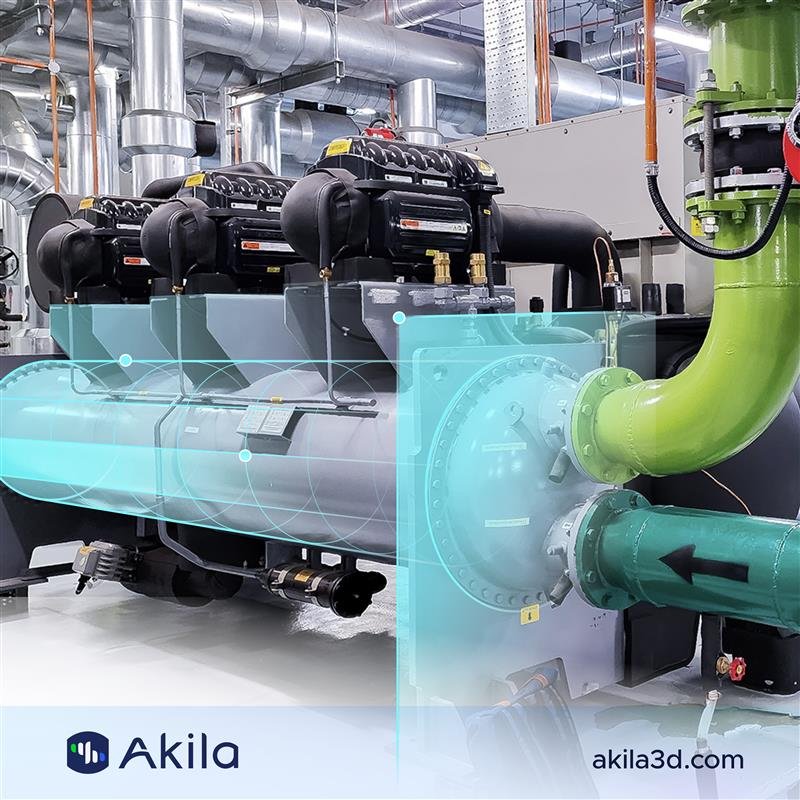
While both chiller-side and air-side systems play important roles, the largest opportunities for energy savings often come from the chiller-side. In fact, up to 70% of HVAC energy consumption comes from chillers, pumps, and cooling towers. Focusing optimization efforts here delivers the most significant impact.


Understanding HVAC Energy Consumption: Chiller-Side vs Air-Side

To see why chiller-side optimization matters, it helps to understand how energy is distributed across an HVAC system. Broadly, HVAC systems can be divided into two main parts:

  • Chiller-side: This includes chillers, pumps, and cooling towers. These components generate and circulate chilled water to cool the building.
  • Air-side: This includes air handling units (AHUs), variable air volume (VAV) systems, and ductwork. These components distribute cooled air throughout the building and regulate ventilation.

A typical commercial building dedicates roughly 70% of HVAC energy to chiller-side operations, with the remaining 30% consumed by air-side components. This energy distribution makes chiller-side optimization the most effective lever for reducing overall HVAC energy consumption.


Why Chiller-Side Optimization Matters

  1. High Energy Consumption and Savings Potential: Chiller-side systems account for the majority of HVAC energy use, making even small efficiency improvements impactful. Inefficiencies in chillers can quickly translate into massive energy waste. By implementing AI-driven optimization, buildings can reduce chiller energy consumption by 20–40%, unlocking substantial cost and carbon savings.
  2. Complexity Makes Chiller-Side Ideal for AI Optimization: Unlike air-side components which operate relatively simply, chiller-side efficiency is highly dynamic and influenced by many interacting factors:
    • Cooling load fluctuations throughout the day
    • Outside weather conditions
    • Supply and return water temperatures
    • Interaction between multiple chillers within a system

Because of this complexity, traditional rule-based management by BMS often fall short. AI however, can continuously analyze these variables, predict inefficiencies, and recommend or implement real-time adjustments, achieving optimal performance without manual intervention.

  1. Operational Implications: Poor chiller-side performance doesn’t just waste energy, it can also create downstream inefficiencies in air-side systems. Optimizing chiller operation first ensures that air-side components receive consistent cooling, which further improves overall system efficiency.


Air-Side Optimization: Important, but Secondary

Air-side systems remain critical for indoor comfort and air quality. AHUs, VAVs, and fans ensure proper ventilation and temperature distribution throughout a building. However, these components consume significantly less energy than chillers, typically only 10-30% of total HVAC energy.

Optimizations such as demand-controlled ventilation or airflow adjustments can reduce air-side energy consumption, but the potential savings are modest – usually 5–15% at most. While these measures are valuable, the largest efficiency gains are still found on the chiller-side.


How Akila Approaches Chiller-Side Optimization

At Akila, our approach to chiller-side optimization combines real-time data monitoring with AI-driven insights:

  • Real-time energy monitoring: Continuously tracks chiller performance and identifies inefficiencies.
  • Demand forecasting: Predict upcoming HVAC demand to better plan and schedule chiller output.
  • AI-driven load balancing: Optimizes operations across multiple chillers to reduce energy peaks.
  • Predictive maintenance: Anticipates potential equipment failures to prevent energy waste.
  • Holistic system coordination: Aligns chiller-side operations with building-wide HVAC demands for maximum efficiency.

Buildings using Akila’s platform have seen chiller energy reductions of up to 40%, proving that the most complex part of the HVAC system can also be the most rewarding to optimize.


Key Takeaways

  • Chiller-side optimization has the largest impact on energy and cost savings in HVAC systems.
  • Air-side optimization is still valuable for comfort and indoor air quality, but its energy-saving potential is limited.
  • The complexity of chiller operations makes AI a perfect tool for delivering continuous, high-impact efficiency improvements.
  • Building managers seeking the highest return on investment in HVAC optimization should focus first on chiller-side systems.

By prioritizing chiller-side efficiency, facilities can reduce energy consumption, cut costs, and advance sustainability goals, all while maintaining comfort and operational reliability.


Latest news
News & insights

 Akila at the AI-xperience Forum in Amsterdam!

We were delighted to join the inaugural edition of the AI-xperience Forum hosted by PNY Technologies, an event designed to bring together the ecosystem of partners, innovators, and experts shaping the future of artificial intelligence.

The discussions throughout the day highlighted how AI is evolving from concept to application, from the balance of data center and edge technologies, to real-time inference powered by integrated sensor and video data, to the growing role of AI-enabled micro-data centers.

For Akila, this dialogue is directly connected to our mission. By applying AI to the built environment, we are helping organizations move beyond pilots and proofs of concept, delivering measurable value in areas like:

  • Predictive and condition-based maintenance
  • Data-driven energy management
  • Portfolio-level sustainability optimization

Taking part in the AI-xperience Forum reinforces Akila’s commitment to working within the broader AI ecosystem to accelerate innovation and make smart, sustainable operations a reality.

A big thank you to PNY for bringing this community together — we look forward to continuing the journey.

Latest news
News & insights

Smarter Manufacturing Starts with Unified Data 

In manufacturing, efficiency and reliability have always been the twin pillars of success. Yet in many facilities today, HVAC systems, production equipment, and process monitoring tools are still managed in isolation. The result? Hidden inefficiencies, unnecessary risks, and operational blind spots that undermine both productivity and sustainability.

Modern manufacturing demands more. Facilities need a single source of truth where environmental and production data converge—so every decision, from the factory floor to the executive level, is based on clarity, not guesswork.

The Challenge: Fragmented Data, Fragmented Decisions

Factories generate vast streams of data across equipment, production lines, and environmental systems. But when these streams remain siloed, stakeholders lack the visibility they need to identify inefficiencies or anticipate risks. This creates gaps between energy performance, production quality, and long-term resilience.

The Solution: OpenUSD and Unified Data

Akila addresses this challenge by using OpenUSD (Universal Scene Description) to standardize and unify building and production environment data. This shared digital framework creates a centralized reference point—a single version of the truth that integrates HVAC, equipment, and process information into one platform.

With this foundation, manufacturing facilities gain more than visibility: they gain control.

Three Layers of Smarter Manufacturing Operations

Akila builds on unified data with a layered approach that transforms operations from reactive to predictive, and from costly to efficient:

  • Centralized energy and production line monitoring
  • Real-time visibility across chillers, compressors, and process equipment is consolidated into one platform, aligned to production KPIs. Facility and production teams no longer need to interpret fragmented dashboards—they can act on unified insights that directly link energy use to production outcomes.
  • Condition-based maintenance
  • AI continuously detects anomalies, from rising vibration in equipment to abnormal energy spikes. By flagging these early, the system enables preventative action before costly downtime occurs, extending asset life and improving reliability.
  • AI-driven HVAC optimization
  • Environmental stability is critical in sensitive areas like cleanrooms and assembly lines. Akila’s AI dynamically adjusts HVAC systems to maintain precision control while lowering energy consumption, ensuring compliance with quality standards without inflating costs.

The Result: From Data to Resilience

This layered approach turns building and production data into actionable insights that strengthen both performance and sustainability. Facilities reduce energy spend, cut emissions, and enhance process reliability—while building resilience into their operations for the future.

Why It Matters for Industrial Leaders

For manufacturers, unifying building and production data is no longer a “nice to have.” It’s the foundation of operational resilience. By bringing clarity and intelligence to every layer of facility and production management, Akila helps industrial leaders protect processes, reduce costs, and move toward a more sustainable manufacturing future.

Latest news
News & insights

Unlocking HVAC Efficiency: How Smart Control Transforms Building Operations


When we think about HVAC (Heating, Ventilation, and Air Conditioning), it’s easy to imagine it as just the system that keeps spaces comfortable. But in reality, HVAC is much more than meets the eye. It’s one of the largest consumers of energy in any building, and its complexity often hides opportunities for major efficiency gains.


What is HVAC?

At its simplest, HVAC is the system that keeps indoor environments livable by regulating three things: temperature, air quality, and humidity. In practical terms, this means heating and cooling to stay comfortable, circulating fresh air to prevent stuffiness, and filtering out dust or pollutants so the air we breathe is clean.

At its core, HVAC can be broken into two major sections that work together to regulate temperature, air quality, and comfort:

  • Chiller-side: This is the cooling backbone of HVAC. It includes chillers, cooling towers, pumps, and piping networks that produce and distribute chilled water or refrigerant. These components absorb heat from inside the building and release it outdoors. On the chiller side, efficiency comes down to how well the system balances load across equipment, controls water flow, and maintains stable temperatures without overworking compressors.
  • Air-side: Once cooling or heating is generated, the air side ensures conditioned air is delivered to occupied spaces. This includes air handling units (AHUs), variable air volume (VAV) boxes, fans, filters, and ductwork. The air side is where thermal comfort and indoor environmental quality are fine-tuned, ensuring the right air temperature, humidity, and ventilation reach every part of a building.

Together, these two sides create a highly interdependent system. A minor inefficiency in one – say, an unbalanced chiller load or poorly calibrated VAV, can cascade into energy waste and comfort issues across the entire building.


Portfolio-wide complexity and scalability

These systems operate across a wide spectrum of building types, from offices and schools to data centers, semiconductor fabs, warehouses, and R&D facilities. At the portfolio level, managing HVAC performance becomes even more complex: a single enterprise might operate dozens of facilities, each with its own layout, equipment mix, and energy profile. This makes it harder to standardize efficiency strategies without advanced tools.

Regional variations also add another layer of complexity. For example, rooftop packaged units are common in the US, while centralized chiller plants are more widespread in Asia and the Middle East. Cold climates prioritize heating efficiency, while hot and humid regions focus on dehumidification and cooling loads. Despite these differences, the fundamentals remain the same, multi-equipment systems working together to maintain thermal comfort and precise indoor environmental conditions.


The roots of inefficiency

Despite its importance, HVAC is often one of the least efficient systems in a building. Why?

  • Manual operation and outdated controls: Many systems rely on rule-based scheduling: “if X, then Y.” But weather shifts, unexpected events, or changes in human traffic patterns can’t be accounted for by rigid rules. Adjusting these rules is complex and time-consuming, leaving systems either overproducing or underperforming.
  • Equipment performance issues: Over time, wear and tear reduce efficiency. An aging chiller may compensate by overproducing, consuming far more energy than necessary. In worse cases, equipment can malfunction, consuming energy without delivering performance.
  • All-or-nothing operation: Many HVAC systems still operate without load balancing. Instead of fine-tuning and moderating the output of  individual equipment, systems often switch entire units on or off, creating unnecessary strain and energy waste.

The result: rising costs, wasted energy, and reduced equipment lifespan.

More explicitly, these inefficiencies can account for 20–40% higher energy consumption than necessary. That means utility bills that eat into operating budgets, avoidable carbon emissions that undermine sustainability targets, and frequent breakdowns that shorten equipment life. Poorly optimized HVAC doesn’t just waste energy, it can directly harm tenant comfort, reduce employee productivity, and complicate compliance with green building standards.


How Akila transforms HVAC performance

Akila addresses these inefficiencies with a smarter, AI-powered approach:

  • Dynamic automation: Instead of rigid rule-based controls, Akila enables real-time, adaptive control that responds instantly to changing conditions like weather, occupancy, or peak-hour demand shifts.
  • Real-time monitoring and predictive maintenance: Akila continuously tracks HVAC energy performance. When an anomaly appears, the system can trigger automated alerts, inspections, and work orders, fixing issues before they escalate.
  • AI-driven load balancing: Akila’s AI forecasts demand at different time horizons (highly accurate short-term predictions and longer-term trend insights). It then intelligently distributes load across equipment, not just deciding what’s on or off, but dynamically adjusting output percentages (e.g., Chiller 1 at 90%, Chiller 2 at 70%). This reduces strain, extends equipment life, and cuts energy use without sacrificing comfort.


The bottom line

HVAC is more than just a background system, it’s the engine room of building performance. Yet without intelligent control, it can quickly become the single biggest driver of wasted energy, higher costs, and premature equipment failure.

With Akila, HVAC evolves from a passive utility into an active performance driver. By automating decision-making, balancing loads across equipment, and predicting future demand, Akila ensures comfort is never compromised while energy use and operational costs are consistently reduced.

The benefits extend far beyond immediate savings. Smarter HVAC management helps organizations meet sustainability goals, align with ESG reporting standards, and scale consistent performance across entire building portfolios. For owners, operators, and tenants alike, this means more reliable comfort, lower operational risk, and a clear pathway toward net-zero operations.

In short: HVAC doesn’t have to be a hidden liability. With Akila, it becomes a strategic asset that strengthens the bottom line today, and future-proofs building operations for tomorrow.


Latest news
News & insights

Smarter Lighting, Smarter Buildings: Unlocking Hidden Energy Savings 

When organizations think about energy efficiency, they often focus on heating, cooling, or large-scale equipment. But one of the biggest hidden sources of waste is far more ordinary: lighting.

Across nights, weekends, and off-hours, lights are frequently left on when no one is around. These small inefficiencies add up to significant costs and emissions. Yet because most facility teams lack visibility into where and when this waste is happening, the problem often goes unnoticed.

Why Lighting Waste is Hard to Catch

Lighting energy waste isn’t usually caused by a single mistake. Instead, it builds up gradually—empty floors left lit after hours, department areas running outside scheduled shifts, or fixtures left on during long weekends.

The challenge is fragmentation. Lighting data is often scattered across different systems or lost in incomplete reports, making it nearly impossible to see the full picture. Without that clarity, even diligent facility managers struggle to pinpoint where improvements can be made.

Bringing Lighting Data Into the Light

At Akila, we’ve developed a smart visualization tool designed specifically to surface these hidden inefficiencies. By unifying all lighting data into one platform, the tool makes it easy for facility teams to:

  • Benchmark actual consumption against expected baselines
  • Spot anomalies like off-hour usage or unusual spikes
  • Unlock savings opportunities that would otherwise remain invisible

Instead of treating lighting as a static utility, facility managers can treat it as a dynamic, measurable resource—one that can be actively optimized.

Case in Point: A Medical Products Factory

Consider a recent deployment in a large medical products factory. Using Akila’s lighting visualization, the facility team uncovered a recurring pattern: significant energy was being consumed during non-working hours.

With this insight, the factory made a few straightforward changes—adjusting shift processes and reinforcing simple behavior changes with staff. The results were immediate and measurable:

  • 7,207 kWh of potential annual savings identified
  • 34.6% reduction in lighting energy use
  • Waste during non-working hours virtually eliminated

This outcome demonstrates how visibility turns lighting from an invisible drain into an efficiency win. No major equipment overhaul, no disruptive retrofits—just data-driven insight leading to smarter operations.

From Insight to Action

Lighting may seem like a small detail in the broader energy picture, but as the factory case shows, small inefficiencies can have big impacts. By shining a light—literally—on hidden consumption patterns, Akila enables facility teams to reduce costs, cut emissions, and make their buildings more sustainable.

In the journey toward smarter buildings, visibility is the first step. And when it comes to lighting, what you can’t see can hurt your bottom line. With Akila, those blind spots disappear—making room for measurable, scalable impact.

Latest news
News & insights

Akila at WEF Summer Davos: Shaping the Future With AI and Decarbonization 

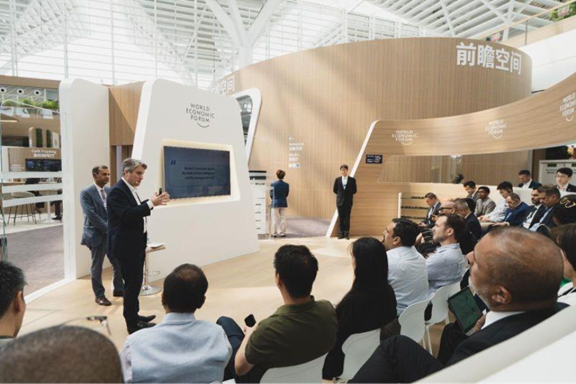
Akila was proud to take part in the 2025 World Economic Forum (WEF) Annual Meeting of the New Champions—commonly known as Summer Davos—held in Tianjin, China. This year’s gathering brought together global leaders, changemakers, and innovators to address some of the most pressing questions facing humanity: How do we harness technology responsibly? How can urbanization align with climate goals? And what role does AI play in accelerating decarbonization?

A Stage for Bold Ideas

The Summer Davos program featured senior representatives from G20 governments, Fortune 500 CEOs, and visionary thought leaders. Across keynote addresses and panel discussions, one theme was clear: technology must be a force for collective good.

Several sessions underscored that urban transformation is as urgent as climate action. The world’s cities are expanding at unprecedented rates, but without intelligent infrastructure and data-driven decision-making, urban growth risks becoming incompatible with sustainability targets.

One statement in particular resonated with Akila’s mission:

“AI-driven solutions are critical if we’re to decouple urban growth from carbon emissions.”

This unified call to action echoed throughout the conference: our cities of tomorrow demand intelligent infrastructure, real-time insights, and adaptive systems that go beyond traditional planning models.

Akila’s Contribution: From Data to Decisions

A highlight of the event was Akila’s own contribution to the dialogue. Francois Amman delivered a keynote titled “From Data to Decisions at the Speed of Light”, where he outlined how Akila is transforming real estate management through AI-powered digital twins and Physical AI.

Drawing on integrations with NVIDIA Omniverse and NVIDIA Metropolis, Francois demonstrated how Akila’s platform enables organizations to:

  • Make instantaneous decisions using digital twin environments,
  • Run “what-if” renovation and retrofit scenarios in real time,
  • Deploy AI agents to surface optimal pathways for investment, sustainability, and resilience.

Unlike traditional systems that stop at reporting, Akila’s approach is action-oriented. By combining high-fidelity modeling with AI-driven insights, we help decision-makers align financial prudence with climate responsibility—turning complex data into clear, immediate choices.

Why It Matters

The WEF Summer Meeting is not simply a networking venue. It is a catalytic forum where urgent societal challenges meet next-generation technology solutions. For Akila, participating is both an opportunity and a responsibility: to contribute to the global dialogue while advancing our mission to decarbonize, digitalize, and future-proof the built environment.

Our journey—from early technology pioneer to recognized innovator on the Summer Davos stage—underscores our commitment to real-world impact. As urbanization accelerates and climate pressures mount, we believe the convergence of AI, digital twins, and intelligent infrastructure will define the next era of sustainable growth.

Latest news
News & insights

La French Tech: Tech for Good, Tech for Impact

Akila was honored to take part in La French Tech Shanghai’s flagship Tech for Good, Tech for Impact event, a dynamic showcase of how innovation is being harnessed to address some of the most pressing environmental and social challenges of our time.

The event brought together leaders and experts from across industries—including energy, education, health, and sustainable production—highlighting the growing momentum behind purpose-driven innovation. The clear message: for technology to make a real difference, it must be scalable, measurable, and rooted in responsibility.

Energy Management in the Spotlight

One of the central themes of the conference was energy—how organizations can accelerate the transition to low-carbon operations while maintaining efficiency and resilience.

During the “Energy Saving & Management” panel, Akila’s Vice President, Philippe Obry, joined representatives from Schneider Electric, L’Oréal, and New Energy Nexus to explore how digital platforms are transforming the way buildings operate.

Philippe shared Akila’s perspective on why energy performance must be understood at both the granular and portfolio-wide level. By connecting all energy systems into a single unified platform, Akila empowers organizations with a real-time view of their energy usage, providing actionable intelligence across multiple sites and assets.

From Data to Action: AI-Driven Energy Optimization

At the heart of Akila’s approach is the use of AI agents that go beyond passive monitoring. These intelligent systems are designed to:

  • Identify inefficiencies and anomalies before they escalate.
  • Coordinate energy management dynamically across portfolios.
  • Recommend and implement interventions that deliver measurable reductions in energy consumption.
  • Optimize performance continuously, not just at reporting cycles.

By bridging the gap between data and action, Akila helps clients unlock scalable energy savings that support both sustainability commitments and financial goals.

A Franco-Global Footprint

As a company with deep roots in the French business ecosystem and a growing presence across Asia and Europe, Akila is uniquely positioned to serve organizations at the intersection of technology, sustainability, and real estate.

The trust we’ve earned from forward-looking companies reflects a shared belief: digitalization is essential for achieving ambitious climate targets while ensuring that business operations remain resilient and efficient.

Beyond Infrastructure: Empowering Better Choices

At Akila, we believe that building intelligence is about more than infrastructure. It’s about empowering people and organizations to make smarter, more sustainable choices—choices that benefit both their operations and the planet.

Events like Tech for Good, Tech for Impact reaffirm the importance of collaboration between innovators, corporates, and changemakers. Together, we can accelerate the shift toward a built environment that is cleaner, greener, and more human-centered.

We extend our thanks to La French Tech Shanghai and S-Tron for curating such an impactful gathering and for driving the conversation around how technology can—and must—deliver real, positive change.

Latest news
News & insights

Akila Joins NVIDIA Partner Network: Advancing AI-Native Digital Twins 

Akila is excited to announce our official entry into the NVIDIA Partner Network (NPN)—a major milestone in a collaboration that began with our entry to the NVIDIA Inception Program in June 2024.

Since then, we’ve had the opportunity to integrate NVIDIA Omniverse and NVIDIA Metropolis (DeepStream) into key projects, including our work with SNCF Gares & Connexions and UM6P – University Mohammed VI Polytechnic – University Mohammed VI Polytechnic. These integrations have helped power high-complexity simulation and advanced computer vision across Akila’s digital twin platform—supporting real-world performance, resilience, and intelligence at scale.

Becoming an NPN member marks our deepening commitment to integrating NVIDIA technologies into our architecture—not as add-ons, but as enablers of the AI-native systems Akila is building across the built environment.

We’re proud to be collaborating with NVIDIA the leaders in GPU-driven AI as we continue advancing OpenUSD, spatial simulation, and Physical AI across buildings, campuses, and cities.

Latest news
News & insights

Building Smarter, Greener Futures: Akila at IGBC 2025 

A few weeks ago, the Akila team had the privilege of attending the International Green Building Conference (IGBC) 2025 in Singapore. Hosted at the Raffles City Convention Centre, IGBC has long been recognized as Asia’s premier platform for advancing a sustainable built environment. This year’s edition brought together industry leaders, innovators, and policymakers, all focused on one pressing question: how can we accelerate the transition to smarter, greener, and more resilient buildings?

A Platform for Collaboration and Innovation

Over the course of two days, the IGBC Exhibition Zone was alive with discussions on technology, policy, and design solutions that are shaping the future of urban infrastructure. For Akila, the event was more than an opportunity to present our vision—it was a chance to listen, exchange insights, and learn from the collective momentum that is building across the region toward net-zero carbon goals.

Spotlight on Partnership: Akila x Signify

One of the highlights of our presence at IGBC was the opportunity to showcase our ongoing collaboration with Signify, a global leader in smart lighting and sensing technologies. Together, we are bridging the gap between digital twin intelligence and real-time environmental responsiveness.

At our booth, we demonstrated how the integration of Akila’s platform with Signify’s technology enables building portfolio owners and operators to:

  • Monitor performance in real time across assets and systems
  • Optimize energy usage dynamically based on data-driven insights
  • Translate operations into actionable ESG metrics, empowering organizations to track progress and demonstrate accountability
  • This collaboration is more than just a technical integration—it is a vision of how interoperable, connected systems can help buildings operate cleaner, greener, and smarter.

A Shared Vision for the Built Environment

What stood out most during IGBC 2025 was the collective drive across industries to reimagine the built environment. From new materials and energy systems to digital platforms and AI-driven insights, the solutions showcased all point in the same direction: a future where buildings are not just structures, but active contributors to sustainability, resilience, and well-being.

We are especially grateful to BCA Singapore and the Singapore Green Building Council for curating such a forward-looking event. Their leadership has created a platform that encourages collaboration, sparks innovation, and accelerates the region’s journey toward sustainability.

Continuing the Conversation

IGBC 2025 was a reminder that the path to net-zero is not a solitary one—it is a collective effort. At Akila, we are proud to be part of this global movement, and even more excited to work alongside partners like Signify in bringing practical, scalable solutions to life.

If we missed the chance to connect during the event, we’d love to continue the conversation. Together, we can build a future where technology and sustainability go hand in hand—where every building becomes a smarter, greener, and more resilient space.

Latest news
News & insights

Navigating Energy Turbulence: How Airports Can Future-Proof Operations

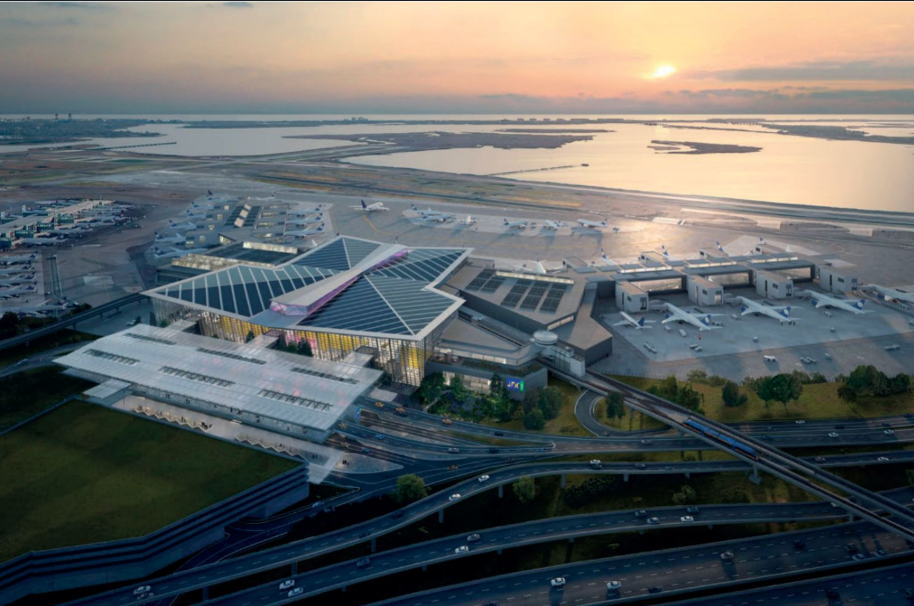
Airports today face unprecedented challenges. According to AlphaStruxure, US airports are navigating a landscape marked by reliability issues, sustainability pressures, capacity constraints, rising costs, and tight timelines for power infrastructure. These challenges are more than operational hurdles—they represent a fundamental shift in how airports must plan, manage, and optimize their assets.

At Akila, we view this “energy turbulence” not just as a risk, but as an opportunity to redefine airport operations. By leveraging digital twins and AI-driven platforms, airports can move from reactive management to continuous intelligence, making decisions that are smarter, faster, and aligned with sustainability and financial goals.

From Static Studies to Living Models

Traditional airport management relies heavily on static studies, spreadsheets, and reactive building management systems (BMS). While these approaches have served well in the past, they cannot keep pace with the dynamic demands of modern airport operations.

Akila transforms the way airports operate by creating a living model of the airport—connecting assets, people, and data in real time. This platform enables airports to:

  • Detect anomalies before they escalate: Predictive monitoring across HVAC, electrical, and operational systems identifies issues early, reducing downtime and maintenance costs.
  • Track carbon emissions continuously: Real-time Scope 1–3 carbon monitoring, combined with AI-driven retrofit recommendations, ensures the most cost-effective interventions for decarbonization.
  • Forecast energy demand dynamically: Load forecasting accounts for new EV fleets, electrification of aircraft, and other operational variables.
  • Link energy, carbon, and finance: ROI dashboards provide airport executives with clear investment guidance.
  • Align energy usage with passenger flows: Computer vision and occupancy data ensure energy is used efficiently without compromising comfort or safety.


Redefining Airport Intelligence

With this approach, airports are no longer constrained by static reports or slow manual analysis. Instead, continuous intelligence becomes a layer that evolves with the airport, adapting to operational changes, sustainability targets, and evolving energy demands.

This shift enables airports to move from:

  • Resilient operations → Carbon intelligence
  • Dynamic forecasting → Financial cockpit
  • Continuous planning → Occupancy-driven optimization

In essence, airports can now future-proof operations, optimizing energy usage, reducing emissions, and improving passenger experiences—all in one integrated platform.


The Opportunity Ahead

Energy turbulence is not going away—it’s accelerating with climate pressures, electrification, and growing passenger demand. Airports that adopt AI-powered digital twins will be positioned to navigate these challenges, transforming them into opportunities for operational excellence, cost savings, and sustainability leadership.

Akila is proud to be enabling this transformation, helping airports worldwide stay resilient, efficient, and future-ready.

Latest news
News & insights

Akila Adopts OpenUSD to Power the Next Generation of AI-Driven Digital Twins 

Meeting the Complexity of Modern Buildings and Cities

Smart buildings and cities are becoming increasingly complex. From multi-tower office campuses to transportation hubs and urban districts, the amount of data generated—and the number of systems that need to work together—has grown exponentially.

To manage this complexity effectively, digital twins—the virtual representations of physical assets—must evolve. They need to be not just accurate and comprehensive, but also AI-ready, interoperable, and capable of scaling with growing portfolios.

Why OpenUSD Matters

To address this challenge, Akila is standardizing on OpenUSD (Universal Scene Description) as the foundation for all its digital twin models. Originally developed by Pixar, OpenUSD is an open-source 3D framework designed for collaboration, high fidelity, and scalability. While it was first used in visual effects, it is now powering real-world infrastructure, bridging the gap between complex building data and actionable insights.

OpenUSD offers several key advantages for modern digital twins:

  • AI-Ready Structure: Its graph-based architecture allows for natural language queries, AI-driven analytics, and simulation. Stakeholders can ask precise questions and receive actionable answers quickly.
  • Scalable Across Portfolios: OpenUSD supports everything from single buildings to entire urban complexes, enabling organizations to manage large and diverse assets efficiently.
  • Open and Interoperable: Being open-source, OpenUSD avoids vendor lock-in, ensuring that data remains accessible and compatible with future systems.
  • Real-Time Simulation: Energy consumption, airflow, occupant movement, and other dynamic behaviors can be modeled in real time, supporting both operational optimization and strategic planning.
  • Future-Proof Integration: OpenUSD integrates seamlessly with platforms such as NVIDIA Omniverse and Metropolis, laying the groundwork for AI-native infrastructure management.

Turning Digital Twins Into AI-Native Platforms

Adopting OpenUSD is not just a technical upgrade—it’s a strategic shift. By leveraging its capabilities, Akila transforms digital twins from static representations into AI-native platforms.

This evolution enables:

  • Smarter operations: stakeholders can quickly identify inefficiencies, predict maintenance needs, and optimize energy usage.
  • Faster insights: AI-driven queries and simulations reduce the time between data collection and decision-making.
  • Better planning: large-scale scenarios, from emergency response to urban development, can be tested virtually before implementation.
  • The Bigger Picture: Smarter Buildings, Smarter Cities

OpenUSD provides the foundation for a new era of infrastructure intelligence. It allows Akila’s clients to move beyond traditional monitoring and reporting, empowering them to ask better questions, get faster answers, and make more informed, proactive decisions.

In a world where urban environments are growing more complex every day, digital twins powered by OpenUSD are helping organizations stay ahead—turning data into insight, and insight into action.

Latest news