HVAC and IEQ: The Hidden Backbone of Global Logistics 

August 29, 2025
Related Articles
Akila appoints CTO to accelerate ESG-driven innovation for the built environment

Akila appoints CTO to accelerate ESG-driven innovation for the built environment

Akila latest features

Akila latest features

Event Recap — “Climate Countdown”: ESG & Decarbonization in Healthcare

Event Recap — “Climate Countdown”: ESG & Decarbonization in Healthcare

Take the next step with Akila

If you want better from your buildings, our team is here to help. Let’s set up a call to discuss your needs and show you how Akila works, from deploying digital infrastructure to optimization.

910-Product-page
Secondary ~ Request Demo Simple

Akila Names Maud Demurge as Head of Akila Americas

August 22, 2025
Related Articles
Smart Buildings Need Smart Data Structures 

Smart Buildings Need Smart Data Structures 

Arkema China Changshu R&D center selects Akila digital twin platform as partner in its decarbonization strategy

Arkema China Changshu R&D center selects Akila digital twin platform as partner in its decarbonization strategy

Why Semantics and OpenUSD are the Key to Intelligent Digital Twins

Why Semantics and OpenUSD are the Key to Intelligent Digital Twins

Take the next step with Akila

If you want better from your buildings, our team is here to help. Let’s set up a call to discuss your needs and show you how Akila works, from deploying digital infrastructure to optimization.

910-Product-page
Secondary ~ Request Demo Simple

Akila and BizzTech Partner to Accelerate Physical AI for Smart Cities and the Built Environment

August 21, 2025
Related Articles
 Akila at the AI-xperience Forum in Amsterdam

 Akila at the AI-xperience Forum in Amsterdam

HVAC and IEQ: The Hidden Backbone of Global Logistics 

HVAC and IEQ: The Hidden Backbone of Global Logistics 

Akila Partners with Thinxtra to Accelerate Smart Building Adoption Across Australia

Akila Partners with Thinxtra to Accelerate Smart Building Adoption Across Australia

Take the next step with Akila

If you want better from your buildings, our team is here to help. Let’s set up a call to discuss your needs and show you how Akila works, from deploying digital infrastructure to optimization.

910-Product-page
Secondary ~ Request Demo Simple

Paris GTC/VIvatech 2025 Roundup

June 18, 2025

At the heart of Europe’s AI-driven infrastructure evolution is a standout collaboration between Akila and NVIDIA — one that took center stage at GTC Paris 2025, featured in NVIDIA CEO Jensen Huang’s keynote, and showcased in their highlight video, Build and Test Smart City AI Agents in Digital Twins.

This partnership has helped position Akila as a key player in the emerging ecosystem of real-time operational intelligence, demonstrating how digital twins, AI agents, and live sensor data can come together to optimize how buildings, campuses, and transit systems function.

From the SNCF Monaco station deployment to advanced Omniverse integrations, here’s a closer look at how Akila is helping define the next generation of intelligent infrastructure — and why our platform is fast emerging as the operating layer of the built world.


A Smarter Station in Monaco: Akila with SNCF & NVIDIA

Akila’s collaboration with NVIDIA and SNCF Gares & Connexions began with a bold ambition: to enhance safety, sustainability, and efficiency at the Monte-Carlo train station in Monaco. That ambition became reality through a live AI-powered digital twin, developed by Akila and integrated with NVIDIA Omniverse.

This initiative is among the first operational deployments aligned with NVIDIA’s Omniverse Blueprint for Smart Cities, bringing simulation, AI, and real-time decision-making into one system.


Key Results at the Monaco Station

  • 20% reduction in energy use
  • 50% faster incident response
  • 50% less system downtime
  • €30,000+ projected annual operational savings per site

The station now manages energy, HVAC, maintenance, lighting, and safety from a unified control layer using Akila’s platform, supported by NVIDIA’s edge AI stack (Metropolis, Omniverse, and Isaac agents). This is not just data collection — it’s integrated, autonomous operations in action.


GTC Paris and VivaTech 2025: Akila in the Spotlight


A Keynote Feature from Jensen Huang

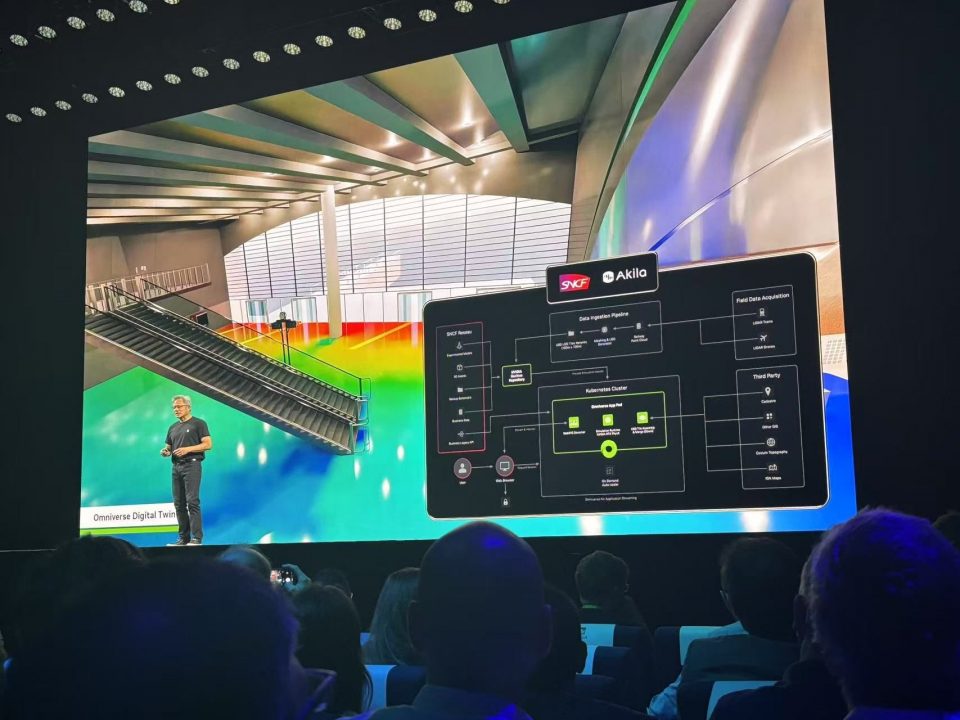
At GTC Paris 2025, Jensen Huang’s keynote laid out NVIDIA’s vision for combining simulation, AI training, and live operations in one continuous loop. He cited Akila’s Monaco project as a prime example:

“These deployments aren’t proofs of concept. They are real, they are live, and they are delivering impact.”

He described how platforms like Akila, using OpenUSD and Omniverse, are enabling infrastructure to adapt and respond faster — turning reactive systems into proactive ones.


The Omniverse Blueprint Workflow

NVIDIA’s Simulate → Train → Deploy framework is now operational through Akila:

  • Simulate: High-fidelity digital twins model real-world assets
  • Train: AI agents learn within these environments
  • Deploy: Agents operate within live infrastructure via Akila’s platform

Akila bridges the digital and physical by turning these simulations into real-time control systems — delivering tangible benefits across operations, sustainability, and safety.


Video Feature: Akila’s Role in the AI Infrastructure Ecosystem

NVIDIA’s feature video, “Build and Test Smart City AI Agents in Digital Twins”, offers a compelling window into how Akila is enabling a new generation of intelligent infrastructure. More than a product showcase, it highlights Akila’s platform as the orchestrator of real-time performance, simulation, and autonomy in built environments.

Check out the video here

By integrating high-fidelity digital twins, live sensor streams, and AI workflows, Akila enables cities and facilities to transition from passive monitoring to intelligent, responsive systems. The video captures how Akila is not only visualizing data — but actively operationalizing it.

Key takeaways from the video include:

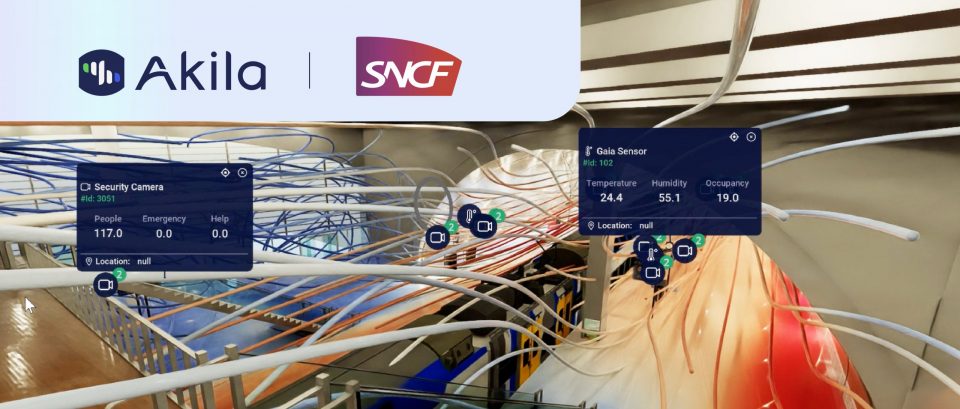
  • Photorealistic 3D dashboards that render live metrics such as energy usage, air quality, foot traffic, and system health, allowing operators to interpret and act on complex infrastructure data in real time.
  • AI agents, trained in virtual Omniverse environments, can be deployed through Akila’s platform to manage systems proactively — automatically adjusting HVAC, responding to abnormal events, or triggering safety protocols.
  • Crowd and behavior analytics powered by ecosystem partner XXII, enabling real-time understanding of movement patterns and occupancy levels to support decisions around comfort, security, and operations.

Rather than offering a futuristic concept, the video demonstrates a functional and scalable solution. It reflects how Akila and NVIDIA’s technologies complement each other — turning simulation into live control and setting a repeatable model for forward-thinking infrastructure operators.


OpenUSD, Interoperability & AI Agents: Akila’s Platform Advantage

At the core of Akila’s platform lies a strategic focus on openness, interoperability, and real-world usability. Built to work across complex ecosystems, Akila leverages OpenUSD (Universal Scene Description) — the foundational data model of NVIDIA Omniverse — to seamlessly integrate with a broad array of systems and technologies.

This architectural approach gives Akila a major advantage:

  • Effortless data integration from diverse sensors, equipment, and platforms — ensuring that critical infrastructure data is unified, not siloed.
  • Cross-platform compatibility for simulation, training, and validation of AI models — reducing time-to-deployment and increasing reliability in the field.
  • Real-time 3D visualization of systems that enhances situational awareness and simplifies complex building management decisions.

But Akila goes further. We don’t just visualize infrastructure — we optimize it. Our platform enables intelligent control loops where autonomous agents continuously monitor conditions, anticipate issues, and take action:

  • Adjusting environmental systems like chillers to maximize energy efficiency
  • Detecting early signs of system failure or safety risks
  • Modifying lighting or HVAC usage based on real-time occupancy

This transforms facilities from static assets into living, learning environments that improve over time. Whether deployed in a single building or across a multi-asset portfolio, Akila delivers a flexible, scalable path to operational intelligence — grounded in standards, interoperability, and measurable results.


What This Means for the Future

This collaboration represents more than technical integration — it’s a strategic move for infrastructure owners seeking to modernize.

Benefits for Asset Operators

  • Unified platform for energy, operations, and maintenance
  • Scalable across facilities and asset types
  • Accelerates decarbonization and ESG compliance
  • Enhances operational agility with real-time insights


From Static Assets to Dynamic Systems

As demand grows for resilient, efficient, and intelligent infrastructure, Akila is uniquely positioned to meet the moment.

By working with NVIDIA and other ecosystem partners, we’re proving that advanced simulation, AI agents, and live control can now operate together — not in the future, but today.

As demand grows for resilient, efficient, and intelligent infrastructure, Akila is uniquely positioned to meet the moment. Our mission is rooted in delivering practical impact — enabling seamless integration, real-time responsiveness, and continuous improvement across buildings, cities, and campuses. By combining interoperable architecture with actionable intelligence, Akila helps operators turn complexity into clarity and performance into progress.


Stay Tuned

With more deployments underway and a growing ecosystem, we’re continuing to build the next generation of operational intelligence — one station, campus, and city at a time.


Related Articles
Feature focus: ESG Dashboard

Feature focus: ESG Dashboard

Unlocking HVAC Efficiency: How Smart Control Transforms Building Operations

Unlocking HVAC Efficiency: How Smart Control Transforms Building Operations

The five dimensions of digital twins

The five dimensions of digital twins

Take the next step with Akila

If you want better from your buildings, our team is here to help. Let’s set up a call to discuss your needs and show you how Akila works, from deploying digital infrastructure to optimization.

910-Product-page
Secondary ~ Request Demo Simple

Akila Featured in Jensen Huang’s NVIDIA Keynote at GTC Paris 2025

June 17, 2025

This year’s NVIDIA GTC Paris brought together visionaries, engineers, and AI practitioners from across Europe and beyond to explore the frontiers of artificial intelligence, digital twins, and simulation technology. With a strong focus on accelerating innovation in industry and infrastructure, GTC (GPU Technology Conference) is widely regarded as a key stage for unveiling what’s next in the AI ecosystem.

On opening day, Akila was proud to be featured twice during the keynote speech by NVIDIA CEO Jensen Huang, where our project with SNCF Gares&Connexions was presented as an example of how simulation and AI can transform the future of mobility infrastructure.


A New Chapter in Smart Mobility: Monaco Monte-Carlo Station

The project featured in the keynote is located at the Monaco Monte-Carlo train station, a complex, high-density transit hub that is part of the national rail operator SNCF’s Gares&Connexions network. In collaboration with SNCF, Akila deployed a comprehensive digital twin of the station, creating a real-time spatial model of the environment that integrates live data from sensors, cameras, and operational systems.

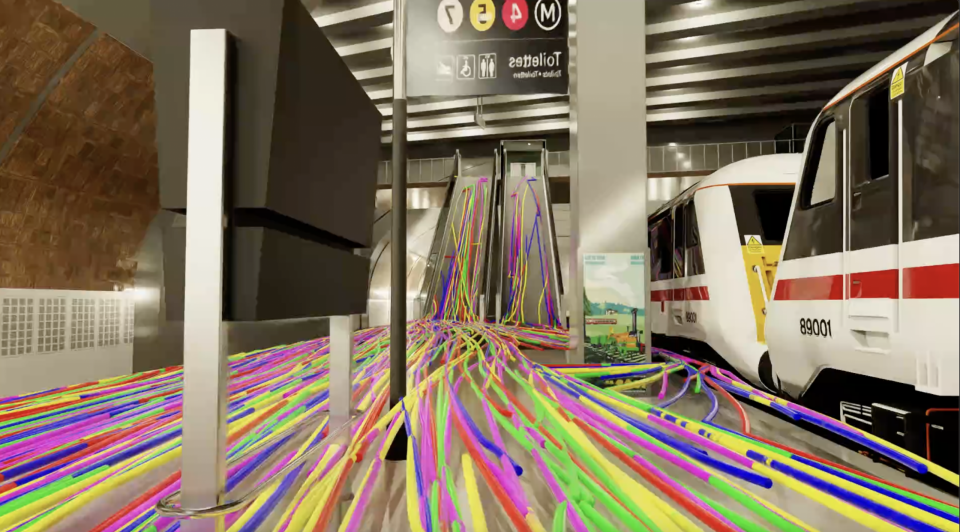
Using this platform, we’ve implemented a range of AI-driven capabilities to help monitor and optimize the station’s day-to-day performance. These include computer vision applications to understand crowd behavior and flow patterns, predictive modeling for energy and HVAC efficiency, and real-time simulations to assess thermal comfort and ventilation quality across the station’s enclosed spaces.

This digital twin isn’t just about visualization—it’s about intelligence. The Monaco deployment reflects our broader mission to build cognitive buildings: smart environments that use AI agents and real-time feedback loops to learn from data and continuously improve how they function.


Akila’s Integration with NVIDIA Omniverse

The project was featured again later in Huang’s keynote in a dedicated segment on digital twins, simulation, and the OpenUSD ecosystem. Here, Akila was highlighted as an early adopter of NVIDIA Omniverse, NVIDIA’s platform for connecting and simulating complex physical environments using open standards.

By integrating our digital twin with Omniverse, we’re able to go beyond static models to conduct dynamic, AI-powered simulations. These simulations allow us to test different operational scenarios for the Monaco station—such as changes in passenger load, airflow behavior, or environmental conditions—and generate insights that can directly inform decision-making.

This real-time modeling, combined with data streaming from the live environment, enables station operators to proactively manage energy usage, improve comfort and safety, and respond more quickly to dynamic crowd situations. It’s a powerful example of how simulation and AI can converge to create resilient, adaptive infrastructure.


A Week of Innovation at GTC Paris

Throughout the week, Akila participated in the NVIDIA demo zone, where we showcased how our platform enables a new era of intelligent operations across infrastructure, real estate, and industrial sectors. The event brought together a cross-section of industries—from urban planning to heavy industry to research institutions—all exploring the use of AI to solve real-world problems.

Being featured in the keynote was a milestone moment for Akila. It signals growing recognition of the role that digital twins and simulation will play not just in buildings and factories, but in public mobility infrastructure, where operational excellence must be balanced with sustainability, safety, and user experience.


Looking Forward

We are deeply grateful to our partners at SNCF Gares&Connexions for their collaboration, ambition, and shared belief in using technology to reimagine the built world. Our appearance in the keynote is not just a recognition of the work done in Monaco—it’s a reflection of a shared vision for what’s possible when AI, simulation, and infrastructure come together.

We’re just getting started. More projects, more innovation, and more cognitive buildings are on the way.

👉 Read our full press release on the Monaco project here


Related Articles
Saint-Gobain deploys Akila at its research center in Shanghai to reinforce sustainability achievement and employee wellness 

Saint-Gobain deploys Akila at its research center in Shanghai to reinforce sustainability achievement and employee wellness 

The EU’s Carbon Border Adjustment Mechanism (CBAM) changes the game of global trade

The EU’s Carbon Border Adjustment Mechanism (CBAM) changes the game of global trade

Akila becomes a member of the Digital Twin Consortium

Akila becomes a member of the Digital Twin Consortium

Take the next step with Akila

If you want better from your buildings, our team is here to help. Let’s set up a call to discuss your needs and show you how Akila works, from deploying digital infrastructure to optimization.

910-Product-page
Secondary ~ Request Demo Simple

SNCF partners with Akila to Launch AI-Powered Digital Twin Platform, Pioneering the Future of Transportation Infrastructure – Starting with Monaco’s Monte-Carlo Station

June 11, 2025

Paris, June 11 2025 –– SNCF Gares&Connexions, France’s national railway operator, has joined forces with Akila, a leader in digital twin and AI platforms to deploy a groundbreaking real-time AI and simulation platform at Monte-Carlo train station in Monaco. This project is a major milestone for smart transportation infrastructure and smart cities, and was achieved by implementing the Akila digital twin platform while integrating NVIDIA Omniverse libraries and the newly announced NVIDIA Omniverse Blueprint for Smart City AI to deliver an application of NVIDIA 3-computer Physical AI architecture. 


Download the Press Release


Akila’s deployment at SNCF Monte-Carlo train station merges three powerful computing layers: simulation with digital twins, AI training, and deployment of AI agents — into a unified system that delivers real-time intelligence and automation to the built environment. By accelerating Akila’s digital twin platform with NVIDIA Omniverse technologies and NVIDIA Omniverse Blueprint for Smart City AI, SNCF is revolutionizing how critical infrastructure is monitored, managed, and integrated with powerful AI agent-driven urban transformation.


“This is not just a digital upgrade—it’s a leap into the future of infrastructure,” said Fabrice Morenon, Managing Director, SNCF Gares&Connexions. “With Akila and NVIDIA, we’re unlocking real-time understanding of our stations to boost efficiency, lower emissions, and ultimately serve the public better. This is a major milestone for SNCF group”


A Digital Twin Revolution in Rail and Transport Hubs

Akila’s platform ingests and consolidates diverse data sources—such as crowd movement, solar heating, airflow, and IoT sensors—to simulate building operations at high fidelity. Through NVIDIA Omniverse technologies, SNCF Gares&Connexions can visualize and interact with 3D digital twins enabling:

  • Emergency simulation to improve safety
  • Energy optimization that has already delivered a 20% reduction in energy usage
  • Faster responses to operational issues, with a 50% cut in intervention times
  • Preventive maintenance to achieve 50% downtime reduction and 100% on-time completion during deployment
  • €30,000 in annual energy savings per site
  • Enhanced training for autonomous systems
  • New use cases in safety, security, and crowd control

This platform also provides a secure, sovereign digital environment thanks to Akila and NVIDIA’s accelerated computing both on-premise and in the cloud, ensuring compliance with SNCF Gares & Connexions’ data governance and cybersecurity standards.


Transforming Real Estate Operations in Real Time

Akila’s real-time AI and simulation platform is helping SNCF Gares&Connexions shift from static building management to dynamic, predictive infrastructure operations. SNCF’s service providers, like French computer vision specialist XXII, are now fully integrated into the Akila platform—offering advanced monitoring and data insight in a user-friendly interface.


Real-Time AI, From Edge to Cloud

This integrated platform lays a foundation closely aligned with the NVIDIA Omniverse Blueprint for Smart City AI, a reference framework for building, testing, and optimizing AI agents in SimReady digital twins:

  • Simulate: Build a SimReady digital twin of specific locations and facilities with the Omniverse blueprint. Remote operators and partners can visualize and interact with infrastructure across locations in a digital twin. Powered by high-speed GPU, this computing enables deep simulations, operational forecasting, and predictive analytics.
  • Train AI models: Currently, Akila uses SNCF’s historical and real-time data to train its AI Assistant agent. It plans to augment its training data with synthetic data generated from NVIDIA Cosmos.
  • Deploy AI Agents: With real-time sensor fusion and computer vision technology from NVIDIA Metropolis, AI agents can generate and act on insights derived from cross-system analytics while maintaining a safe and healthy environment for occupants. This includes understanding station energy, thermal loads, crowd movement, airflow, and IoT sensors.


From Monaco to the World

This initiative is more than a local success — it is a model for how cities and transport networks can embrace physical AI to build resilience, sustainability, and efficiency.

Akila and its partners are already adapting this model to airports, ports, and logistics hubs across Europe, the United States, and the Middle East — where the appetite for smart infrastructure is growing rapidly.

“The experience and insights gained through this project are already proving invaluable,” said Philippe Obry, Vice President of Akila. “We are now working with cities and asset owners to scale this platform across global portfolios — enabling a real-time digital nervous system for the built environment.”

Related Articles
Akila Featured in Jensen Huang’s NVIDIA Keynote at GTC Paris 2025

Akila Featured in Jensen Huang’s NVIDIA Keynote at GTC Paris 2025

AI-Enhanced Carbon Footprint Tracking for Corporate ESG Goals

AI-Enhanced Carbon Footprint Tracking for Corporate ESG Goals

Akila latest features

Akila latest features

Take the next step with Akila

If you want better from your buildings, our team is here to help. Let’s set up a call to discuss your needs and show you how Akila works, from deploying digital infrastructure to optimization.

910-Product-page
Secondary ~ Request Demo Simple

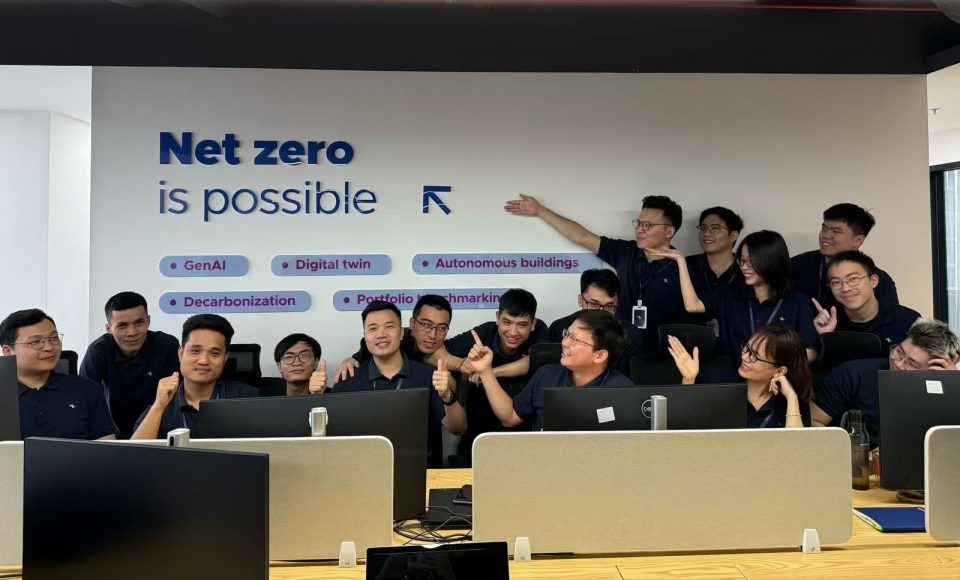
Akila Expands R&D Hub in Vietnam to Drive AI-Powered Cognitive Buildings

March 12, 2025

This month marks a major milestone for Akila as our R&D team in Vietnam moves into a new, expanded location in Hanoi. Established in 2023, this hub has rapidly become a driving force behind our AI innovation, pushing the boundaries of smart building technology.

With the rapid urbanization of cities across the world, the demand for intelligent, data-driven real estate solutions is greater than ever. At Akila, we are shaping the future of Cognitive Buildings, leveraging cutting-edge AI and strategic partnerships – such as our collaboration with NVIDIA, to accelerate the transformation of the built environment.

Why Vietnam? A growing hub for AI innovation

Vietnam’s thriving tech ecosystem, highly skilled talent pool, and strong government support for digital transformation make it an ideal location for an R&D hub dedicated to AI and real estate technology. Our team in Hanoi is tackling some of the biggest challenges in the industry, developing solutions that will redefine how real estate portfolios are managed worldwide.

Pioneering AI-driven real estate intelligence

Our Vietnam R&D team is at the forefront of several key AI initiatives that will shape the next generation of smart buildings:

  • Generative AI & Large Language Models (LLMs) – We are integrating generative AI and LLMs into Akila’s platform to create a truly unified real estate data ecosystem. This enables users to access real-time insights through natural language queries, making data-driven decision-making faster and more intuitive.
  • Advanced real-time simulations – We are developing AI-powered simulations that optimize critical building performance factors, including airflow, thermal comfort, lighting efficiency, and human traffic patterns. These simulations help property owners enhance energy efficiency and occupant experience while reducing operational costs.
  • Scaling AI for district-wide optimization – Beyond individual buildings, our AI-driven solutions are expanding to entire urban districts. By simulating and analyzing real estate data on a city-wide scale, we can optimize energy use, sustainability performance, and operational efficiency across multiple properties.

Building the future of smart real estate

Our vision is to transform the real estate industry by making every building a Cognitive Building—one that continuously learns, adapts, and optimizes its operations using AI. The work being done in our Vietnam R&D hub is a crucial part of this mission, driving scalable, AI-powered solutions that redefine how we interact with the built environment.

As we continue to expand our R&D capabilities, we invite innovators, technologists, and partners to join us on this journey. If you’re in Hanoi, stop by and say hello—we’d love to connect and share more about the exciting work happening at Akila.

For a more detailed breakdown of how AI can be used to enhance the building lifecycle, check out this blog post.

Related Articles
Akila and BizzTech Partner on Seattle’s Smart-Neighborhood Project Using NVIDIA Metropolis and VSS to Advance Net-Zero Goals   

Akila and BizzTech Partner on Seattle’s Smart-Neighborhood Project Using NVIDIA Metropolis and VSS to Advance Net-Zero Goals   

Bolloré Logistics to optimize energy consumption in Songjiang warehouse with Akila digital solution

Bolloré Logistics to optimize energy consumption in Songjiang warehouse with Akila digital solution

Unlocking HVAC Efficiency: How Smart Control Transforms Building Operations

Unlocking HVAC Efficiency: How Smart Control Transforms Building Operations

Take the next step with Akila

If you want better from your buildings, our team is here to help. Let’s set up a call to discuss your needs and show you how Akila works, from deploying digital infrastructure to optimization.

910-Product-page
Secondary ~ Request Demo Simple

How digital twins and AI can enhance accessibility through asset management
October 17, 2024

Accessibility has become a fundamental requirement in public spaces, such as stations, shopping centers or buildings as it allows people with disabilities, elderly people, parents with young children, or those with heavy luggage to navigate in those spaces independently. Accessibility often relies on assets such as lifts, automatic doors, public toilets, or ramps which play a key role in this independence. However, when one of those assets stops functioning, it can disrupt the daily life of people with mobility challenges as their access to those places will be limited.

That’s why the maintenance of these assets is crucial: as just one out of service lift can lead to huge inconvenience in day-to-day life as it would leave individuals with accessibility needs stranded, dependent on assistance, or unable to safely access critical services.

That’s when digital twins and AI can make a change.

Digital twins are virtual models of physical assets that allow monitoring of their performances in real time. Artificial Intelligence complements digital twins by enhancing decision-making through data analysis. AI can process vast amounts of data collected by digital twins and use it for predictive maintenance, anomaly detection, and automated alerts.

Those technologies put together could ensure that these crucial assets are continuously accessible by predicting any down time, or by detecting any anomaly that could happen, making those assets more reliable to people who need them on a day-to-day.


The role of digital twins in asset management

As mentioned earlier, digital twins are virtual replicas of physical assets, such as a lift or a ramp for example. These digital models are continuously kept up to date with real-time data from sensors embedded in the physical asset. This creates a dynamic representation that replicates the asset’s current condition.

With this digital model, facility managers can monitor closely those assets and not only track and improve their performance, but they can also detect earlier any (minor) issue that could have led to a complete breakdown in the long term and caused a major disruption for anybody requiring accessibility. For instance, if a sensor detect that the door mechanism of an elevator is starting to lag, the digital twin can flag this early warning, prompting maintenance before the issue escalates.

Digital technology has the ability to ensure that assets remain available and safe at all times, allowing people with accessibility needs to navigate through public spaces without the worry of encountering equipment that would not work; whether it’s a family going through an airport, or someone in a wheelchair needing to access a platform in a station.

How AI can enhance predictive maintenance and accessibility

If digital twins can provide a digital model of assets with real time data, it’s AI that will be able to use that data for asset reliability. By analyzing and processing data collected, AI becomes a powerful tool that can predict any issue, or when a failure is going to occur.

AI is able to process and notice patterns that would not be noticed by an engineer for example. By continuously analyzing data from the sensors, such as an elevator or automatic doors, AI can detect if the doors of the elevator started opening slower than usual, etc. And even if human maintenance may still be required, AI is able to identify issues early and before they escalate to major issues that would cause disruptions. Facility managers can then schedule maintenance not based on a fixed schedule, but on necessity and urgency.

Not only can it help save money, but it also ensures that those crucial assets remain available at all times for people who depend on them on a daily basis, enhancing their independence and safety.


Digital twins are a real improvement in enhancing accessibility, combined with AI these technologies can both help ensure that assets, such as ramps or lifts, that are vital for people with mobility challenges, remain operational and reliable. But it also contributes to building a future of more inclusive, adaptive spaces.

The integration of advanced technologies like digital twins and AI provides a reliable foundation for space planning in retrofits and improvements. Facility managers also now have the possibility to simulate different scenarios, such as adding different accessibility assets inside the twin and can then test the impact of their placement on traffic flow for example, prior to even beginning the project. This allows to find the most efficient solution that won’t cause any important disruption.

As accessibility has become a key priority in today’s world, leveraging digital twins and AI will play a crucial role in creating environments that are not only accessible but also safe and adaptive to the changing needs of their communities.

Related Articles
HVAC and IEQ: The Hidden Backbone of Global Logistics 

HVAC and IEQ: The Hidden Backbone of Global Logistics 

Akila expands manufacturing customer base with Gerflor

Akila expands manufacturing customer base with Gerflor

Carbon neutral buildings are essential for stopping climate change

Carbon neutral buildings are essential for stopping climate change

Take the next step with Akila

If you want better from your buildings, our team is here to help. Let’s set up a call to discuss your needs and show you how Akila works, from deploying digital infrastructure to optimization.

910-Product-page
Secondary ~ Request Demo Simple

Decarbonizing heavy industry: AI-Driven solutions

October 08, 2024

Heavy industry is a key of the global economy, but it is also a major contributor to carbon emissions: its direct CO2 emissions amount is around 6 billion tonnes per year, meaning more than one-sixth of total CO2 emissions from the global energy system. The pressure for heavy industry to decarbonize and adopt more sustainable practices has become an emergency, not only for regulatory necessities, but also because it represents an opportunity to enhance their operational efficiency and reduce their costs.

Known to be one of the most challenging industries to decarbonize, heavy industry has been unsuccessful to lower their carbon emissions efficiently. In this context, Artificial Intelligence (AI) has become a game-changing tool in the move towards decarbonization and represents a promising way towards sustainability.

New AI-driven solutions can allow the industry to rethink their way of working by helping optimize energy consumption, improve predictive maintenance, but also to significantly reduce carbon footprints.

One of the main uses of AI is for predictive maintenance, where AI monitors the health of industrial assets in real time, detecting potential issues early and allowing for proactive repairs. In this case, AI could prevent unexpected breakdowns, reduces downtime, and minimizes energy waste caused by inefficient or faulty equipment.

AI can also play a significant role in energy consumption optimization: by analyzing vast amounts of data from operations, AI algorithms can identify real-time efficiency opportunities, enabling companies to fine-tune their energy use, reducing unnecessary consumption and associated emissions.


AI-driven solutions for reducing emissions

Artificial Intelligence (AI) is revolutionizing all industries by offering new and more efficient ways to work.

In heavy industry, AI has the potential to help with the decarbonization challenge: it offers new innovative solutions to tackle it, by reducing emissions in the industry while still allowing to optimize operations and cut energy waste at the same time:

Predictive maintenance:

AI can play an important role in monitoring equipment’s health: with the help of sensors and data, AI can predict when an asset is most likely to stop working or become less efficient. This proactive approach prevents energy waste by ensuring systems are operating efficiently and avoiding unplanned downtime. In the case of heavy industry, which relies on complex systems, AI can help optimize the maintenance schedule of equipment and ensure they perform at their best.

Energy consumption optimization:

By analyzing real-time energy usage patterns of equipment, AI can identify inefficiencies or opportunities to minimize waste. Unlike human controlled systems, AI continuously learns and adapts, not only it can recommend adjustments for heating, cooling or material handling, but it can also ensure that the energy usage is optimal according to the needs of a facility and therefore contributes to emissions reductions.

Supply chain emission reduction:

AI can also help optimize logistics by improving route planning or even selecting the most efficient transportation modes reducing fuel consumption in the transportation of materials. Additionally, AI can help companies source more sustainable materials and improve supply chain transparency, identifying emission hotspots and enabling better decision-making to reduce their overall carbon footprint.


Akila’s AI-driven platform

Akila’s AI-powered platform, combined with IoT, offers heavy industries a comprehensive solution for reducing emissions and optimizing energy consumption through digital twin technology.

Real-time monitoring:

With the help of IoT sensors, Akila can continuously track emissions in real-time but also your energy usage. This allows companies to quickly identify issues and address them, such as equipment underperformance, but also to reduce their CO2 emissions.

Data-driven insights:

Akila’s platform analyzes vast amounts of operational data to uncover inefficiencies and suggest optimizations. By analyzing energy use, the platform can recommend adjustments, like improving heating and cooling systems, improving operational efficiency of companies.

Predictive forecasting:

By using AI to predict future energy needs, Akila can anticipate and manage demand more efficiently. But this proactive approach mainly helps prevent energy waste and reduces the strain on equipment, further cutting emissions with the use of the digital twin technology.


Challenges and future outlook

If AI’s future in heavy industry and to help for decarbonization is bright, its adoption can face barriers: as we know, legacy systems often lack compatibility with modern AI solutions, making upgrades more expensive and harder to implement.

With the crucial need for heavy industry to meet sustainability goals, AI seem to become a solution in driving green innovations as it could accelerate industries’ decarbonization efforts while still improving its operational efficiency.

However, the investment required for AI driven solution to be implemented could allow organizations to make substantial cost savings and significant environmental impact makes it a necessary step toward a sustainable future. By embracing AI, heavy industry can not only meet its sustainability goals but also pave the way for a greener, more efficient tomorrow.

AI’s potential to help with decarbonization goes beyond heavy industry: combined with other sectors, such as the construction or building management. By integrating AI across those different industries, it opens new ways to decarbonization and sustainability. Learn more about AI’s role with Akila in the building lifecycle here.

Related Articles
Paris GTC/VIvatech 2025 Roundup

Paris GTC/VIvatech 2025 Roundup

Akila joins UNFCCC initiative, “races” for a resilient, zero-carbon future

Akila joins UNFCCC initiative, “races” for a resilient, zero-carbon future

The role of Building Management Systems in improving occupants’ safety

The role of Building Management Systems in improving occupants’ safety

Take the next step with Akila

If you want better from your buildings, our team is here to help. Let’s set up a call to discuss your needs and show you how Akila works, from deploying digital infrastructure to optimization.

910-Product-page
Secondary ~ Request Demo Simple

Using AI throughout the building lifecycle

December 20, 2023

Artificial intelligence hero banner

Buildings may not be the first place where you might think of the application of Artificial Intelligence (AI). But just as AI technology is being used to transform sectors like business and finance, it has also brought about significant changes in the architecture, construction, and building management sectors.

Integration of AI throughout the building lifecycle is reshaping key processes from planning to operations. At every stage, different AI tools are being used to enhance efficiency, productivity, and even safety.

AI in the building lifecycle infographic

AI in building design

AI in building design marks a transformative shift from traditional manual drafting to automated processes, revolutionizing architectural planning and execution. More specifically, AI technologies in the design phase are impactful in five different ways: streamlining early-stage planning, enhancing architecture mapping, optimizing sketching, improving urban planning, and automating documentation.

Streamline early-stage planning

Floor plans serve as essential blueprints employed by architects in formulating a building’s layout. In design, AI can reduce the necessity for manual drafting. One of the more popular tools for this process is Stable Diffusion, although other types of generative adversarial networks (GANs) allow architects to produce floor plans by taking into account building measurements and environmental factors.

The tools empower architects by swiftly generating a diverse range of design variations based on specified parameters, enabling rapid exploration of different layout possibilities and design alternatives during the early-stage planning process.

Additionally, stable diffusion technology, known for its capacity to produce high-quality images from varied inputs, aids in visualizing detailed architectural aspects early on, facilitating more informed decision-making in the initial planning phases.

Enhance architectural mapping

Through the integration of computer vision into any camera, AI can help architects automatically create floor plans and CAD models with existing videos or images of real-life spaces. This innovative technology is undergoing trials for architectural mapping, granting architects deeper insights into existing structures before initiating construction or renovation endeavors. Harnessing AI algorithms for this task significantly diminishes the time and expenses traditionally linked with mapping out a new environment.

Computer vision identifying different objects

Optimize sketching

AI-driven design solutions significantly contribute to the process of sketching and creativity by empowering designers to broaden their creative horizons and produce a greater number of viable concepts within shorter timeframes. Presently, it has become a regular practice, even among seasoned architects, to utilize publicly accessible AI tools like MidJourney to expedite the sketching and conceptualization phases.

Although AI adeptly generates multiple draft options swiftly, architects are tasked with the responsibility of selecting the optimal design and refining it manually. While AI excels in generating diverse iterations, expediting the initial design phases, it remains incapable of formulating the ultimate solution. Its strength lies in providing numerous versions that streamline the early stages of design, yet the crucial input of human intervention remains indispensable.

Improve urban planning

The intricacies of urban planning demand a comprehensive assessment of factors like population density, traffic congestion, availability of public transportation, and the provision of green spaces. AI can help architects go beyond a single building and have a holistic view of urban planning with 3D models that simulate the possibilities of innovative and sustainable design within the existing urban constraints. These simulations serve as invaluable tools for planners, allowing them to optimize their decision-making processes and forecast potential challenges well in advance, thus preemptively addressing issues that may arise.

Automate documentation

Architectural endeavors commonly entail copious paperwork encompassing contracts, permits, and various documentation. AI-driven solutions offer automation by extracting relevant details from building plans and seamlessly generating essential project documentation. Through this approach, architects can uphold document precision while significantly economizing time otherwise spent on manual tasks.

Revolutionizing construction

AI can play a role in digitalizing one of the least digital industries in the world: construction. Through a variety of applications, AI can bring this industry into the modern era by streamlining inefficiencies and enhancing the quality of information in the handover process between architecture and construction.

AI-powered bidding

The construction bidding process is characterized by its extensive duration, intricate nature, and substantial expenses. Even for accomplished firms, securing one contract means investing a lot of time in 10 other failed contracts. In other words, a significant portion of resources invested in developing those bids often yields minimal returns. With faster analysis of detailed information on the construction and real estate market, AI can help find the most cost-efficient building designs, based on material procurement, fabrication, and construction costs.

Reduced safety hazards

Safety in construction stands as a paramount priority within the industry, its significance continually growing along with the heightened complexity of modern projects. Through the deployment of on-site cameras embedded with computer vision capabilities, the identification of safety lapses, such as employee proximity to heavy machinery, occurs instantaneously, prompting immediate notifications to project supervisors.

By integrating AI models with Building Information Modeling (BIM) data, safety officers in construction can discern high-risk zones prone to accidents, facilitating strategic site management to circumvent potential hazards. AI can help identify safety hazards both during the design process and before and after construction.

Enabling parametric architecture

The advent of AI-enabled parametric design (a design method in which building features and engineering components are shaped based on algorithmic processes rather than direct manipulation) presents a pioneering methodology for crafting intricate architectural designs attuned to distinct objectives. AI models, by considering diverse parameters such as building materials and spatial constraints, adeptly encode designs through geometric rule programming. This approach empowers architects to meticulously align each design with precise criteria, ensuring their fulfillment of standards.

Operational efficiency

AI is perhaps the most powerful in buildings when applied to operation. By harnessing different AI-driven solutions, buildings can optimize buildings’ energy management and predict maintenance needs but also reveal HSE risks with precision.

Optimizing building energy management

Through the utilization of machine learning, the potential arises to enhance energy efficiency within buildings significantly. AI-driven solutions can identify inefficiencies and propose ideal configurations for air conditioning, ventilation, heating, and lighting systems, thereby optimizing a building’s overall performance.

Additionally, sophisticated AI tools like computational fluid dynamics (CFD) simulations and thermal analysis software facilitate the evaluation of thermal efficiency in architectural projects even before the commencement of construction, offering insightful assessments ahead of the building phase.

After equipment performance information is collected through sensors and meters, a library of benchmark data is applied, analytics are performed, and potential operational improvements are identified. To automate insights into actions as they optimize assets with IoT, many companies are advancing their use of predictive analytics to AI or learning systems.

By leveraging AI-backed data analysis, building owners can significantly cut energy consumption and achieve ambitious cost-saving targets. For example, by combining data for heating and cooling with micro-location forecasts, an HVAC system can deliver more efficient heating and cooling.

Energy managers can leverage Analytics can also be used to prevent energy waste by isolating inefficient energy use. Sensor-controlled systems can monitor dispensing and water use. Cognitive maintenance systems can help preserve the health of critical building equipment and assets by anticipating asset failure and guiding timely interventions.

Predicting maintenance needs

AI is pivotal in predicting maintenance needs within building operations by leveraging data analytics and machine learning algorithms. By continuously collecting and analyzing various data points such as equipment performance, environmental conditions, energy usage patterns, and historical maintenance records, AI models can identify potential issues before they escalate.

These predictive models can forecast equipment failures or maintenance requirements, enabling proactive interventions. Through anomaly detection and pattern recognition, AI systems can detect deviations from normal operation, signaling potential breakdowns or inefficiencies. Ultimately, this proactive approach to maintenance helps reduce downtime, optimize resources, and ensure the smooth functioning of building systems, leading to cost savings and increased operational efficiency.

Revealing HSE risks

In addition to contributing to project development, AI and machine learning models serve as supplementary validation systems capable of discerning imperfections within engineering designs. They can detect structural vulnerabilities arising from faulty materials or construction methodologies. Moreover, employing AI models to scrutinize extant designs and structures enables architects to preemptively pinpoint potential risk areas before the commencement of any construction activities.

Embracing change

AI has a multitude of applications to enhance the design, construction, and operations of buildings and can revolutionize our approach to the building lifecycle. A lifecycle that, until this point, has contributed 40% of all carbon emissions into the environment.

Although traditionally hesitant to digitalize, there may be little choice for this industry if AI can deliver on its potential to improve speed, efficiency, accuracy, and carbon impact. Decision-makers at architectural firms, construction groups, and building operators are looking at a fresh opportunity to transform their processes for the better substantially.

Related Articles
Akila x Milesight: Accelerating the AIoT Frontier for Smarter, Safer, Greener Spaces

Akila x Milesight: Accelerating the AIoT Frontier for Smarter, Safer, Greener Spaces

Enersize and Akila sign exclusive partnership for Asia market

Enersize and Akila sign exclusive partnership for Asia market

Eliminating greenwashing with data, IoT, and digital twins

Eliminating greenwashing with data, IoT, and digital twins

Take the next step with Akila

If you want better from your buildings, our team is here to help. Let’s set up a call to discuss your needs and show you how Akila works, from deploying digital infrastructure to optimization.

910-Product-page
Secondary ~ Request Demo Simple