Building the next generation of smart campuses: Energy, operations, and video intelligence in education

December 11, 2025

 

Educational institutions today face a unique combination of operational pressures. Campuses are growing more complex to manage, students and faculty expect safer and more responsive environments, and administrators are under increasing pressure to reduce energy consumption and meet sustainability targets. As these needs expand, campuses must look for tools that provide better visibility, faster decision making, and long-term resiliency.

Akila supports this transformation by bringing campus operations, energy management, maintenance, and video intelligence together into a single, unified platform. For schools, universities, and research facilities, this creates a clearer, more actionable understanding of how their campuses are performing in real time.


Modern challenges across campus operations

Most educational environments face a similar set of hurdles. Large campuses often rely on aging or inconsistent infrastructure, with HVAC, utilities, and equipment spread across many different building types. Energy consumption is high, especially in spaces such as labs, dormitories, and lecture halls. Maintenance teams struggle with limited visibility and reactive workflows. On top of this, institutions need faster ways to understand what’s happening across campus – whether an incident needs review, a crowded area needs attention, or a room’s usage patterns suggest a better scheduling or energy strategy.

These challenges create inefficiencies that impact sustainability, campus experience, operational continuity, and planning.


A unified digital foundation for smarter campuses

Akila addresses these challenges through a holistic approach that connects building systems, equipment data, IoT devices, and video sources into a single platform. This gives administrators, facility teams, and safety staff a shared operational picture of the entire campus.

Optimized energy and HVAC performance

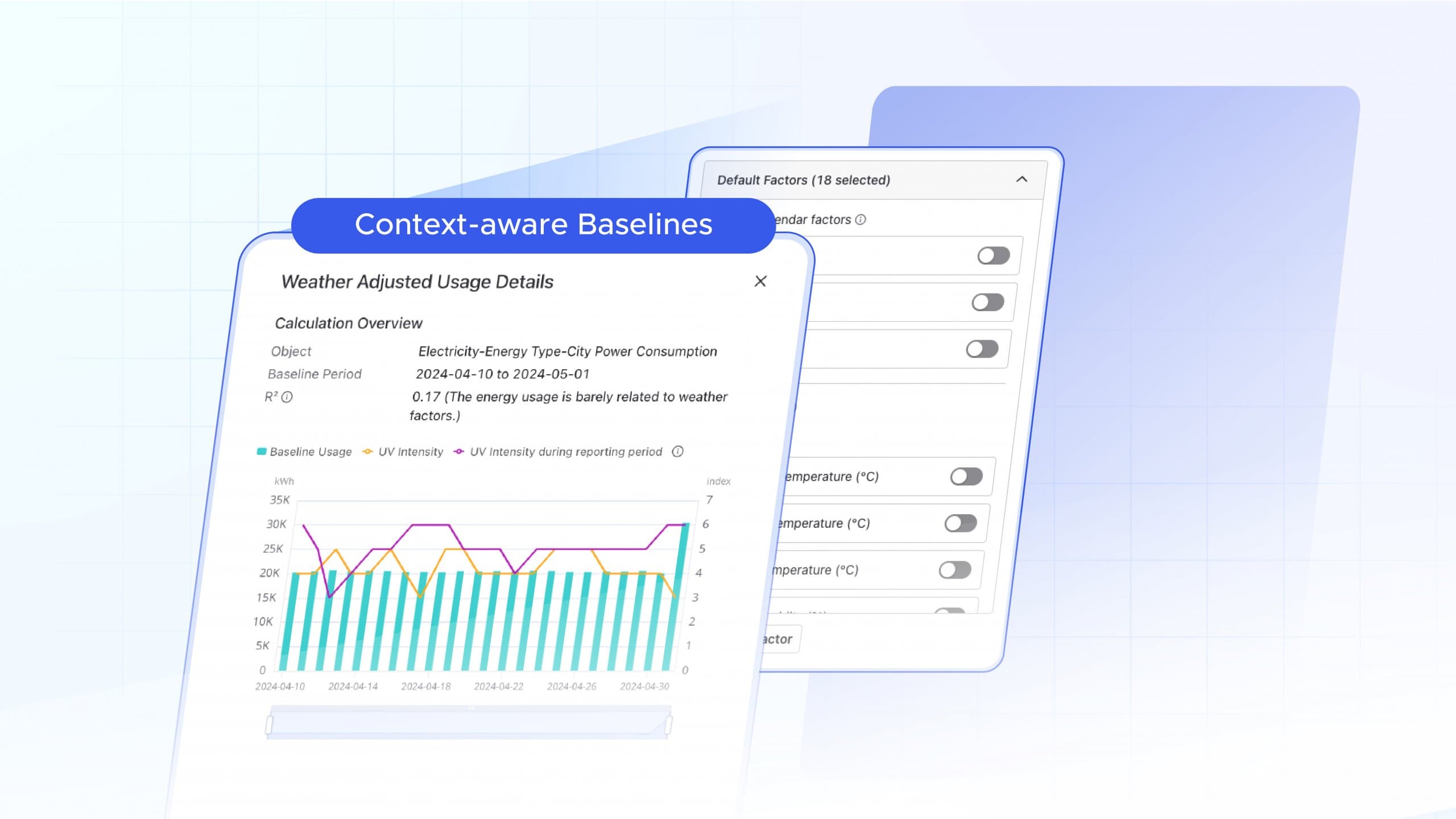
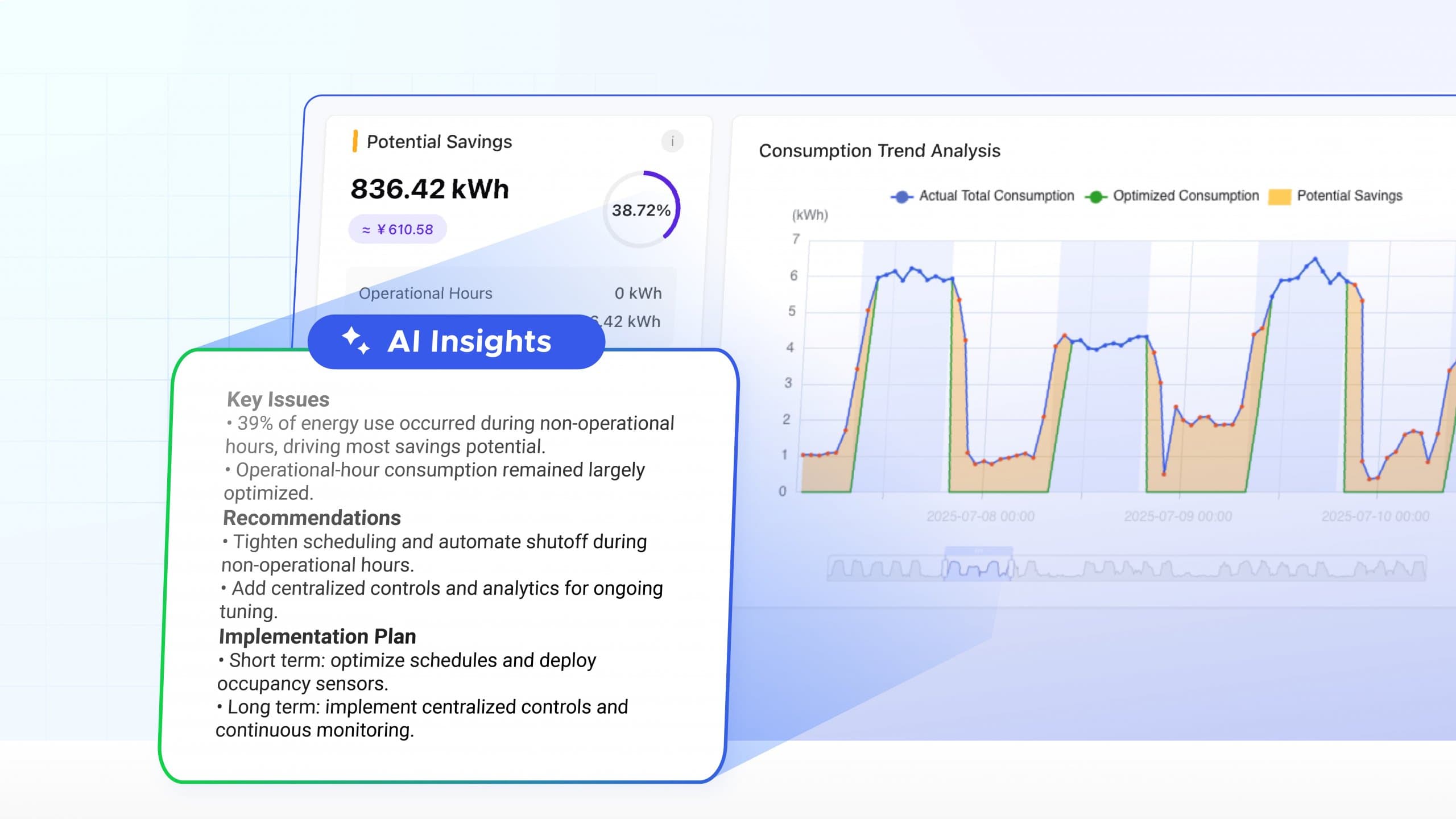
AI-driven analytics help institutions better understand how their buildings consume energy, alert teams to anomalies, and automatically adjust HVAC systems according to occupancy and usage patterns. Whether for classrooms, research spaces, or residential buildings, Akila delivers more efficient performance while still maintaining comfort and reliability. Clear energy baselining and carbon tracking also help institutions align to sustainability commitments and regulatory requirements.

Predictive maintenance and digital twin visualization

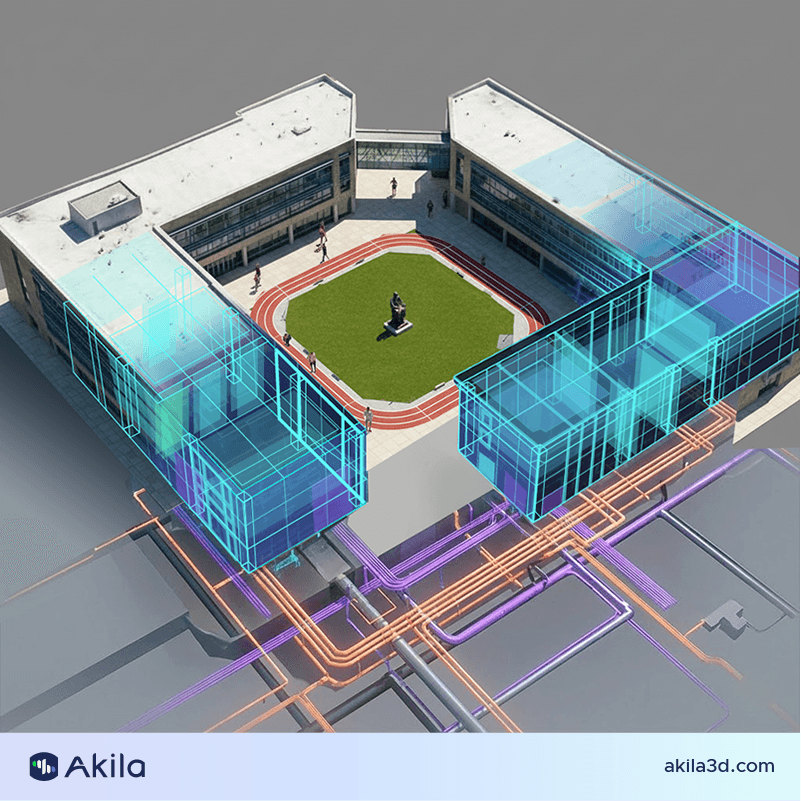
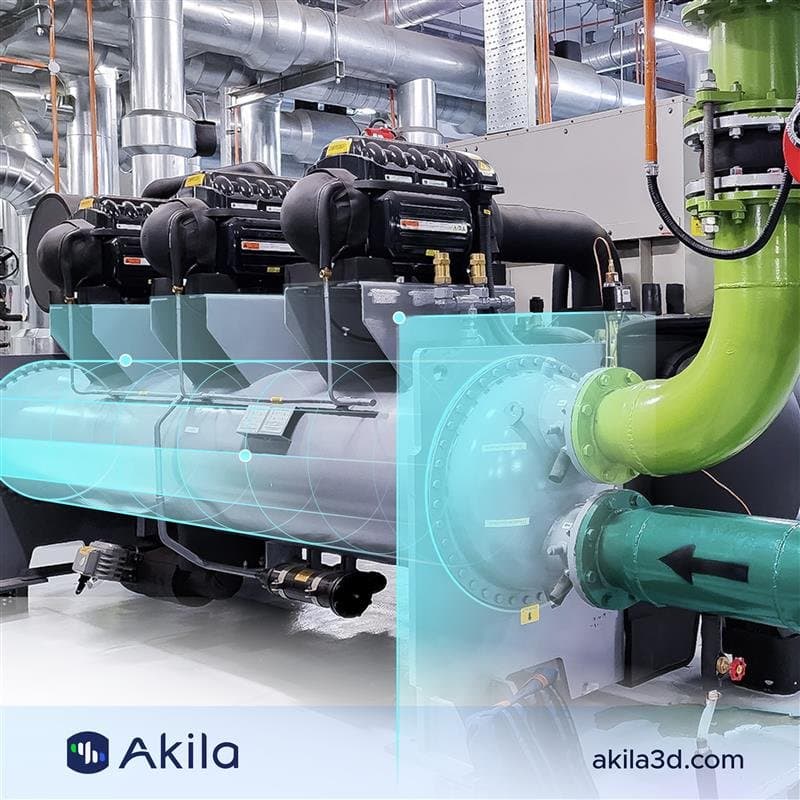
A campus-scale digital twin brings every asset and building into a clear 3D view, allowing teams to quickly locate equipment, understand system relationships, and respond faster. Condition-based maintenance ensures that faults are detected early and repairs are scheduled before they disrupt classes or operations. As campuses expand, this digital foundation becomes a critical tool for planning and long-term lifecycle management.

Video analytics for faster insights

As campus environments grow more dynamic, the ability to quickly understand what happened in a specific area or timeframe becomes increasingly important.

Akila integrates Video Search and Summarization (VSS) to make video data more accessible and efficient to use. Instead of manually reviewing long footage, teams can use AI to instantly search for relevant moments or generate concise summaries around an event window or location. This supports faster incident verification, better coordination, and a clearer understanding of activity patterns across the campus.

VSS is not positioned as surveillance technology – it is an operational intelligence tool that helps education institutions gain insights quickly, improve response times, and make more informed decisions about space utilization and campus planning.


Creating better learning environments

When energy management, maintenance, and video intelligence operate through a unified platform, campuses experience tangible improvements.

  • Learning spaces stay more comfortable and consistent.
  • Maintenance issues are addressed proactively rather than reactively.
  • Activity patterns reveal how buildings are truly used, supporting smarter scheduling and resource allocation.
  • Campus teams gain faster access to critical information during incidents or peak activity periods.
  • Sustainability strategies align more closely with real operational data.

These outcomes directly support the core mission of education institutions: providing safe, healthy, and empowering environments for students and staff.


Designed to scale across diverse campus environments

Akila is designed to scale seamlessly from single buildings to multi-campus portfolios. Institutions can standardize energy reporting, maintenance workflows, and operational practices across all locations while maintaining the flexibility needed for different building types and usage patterns.

This approach provides administrators with long-term digital governance and ensures consistency even as campuses expand, renovate, or adapt to new operational demands.


Building the future of digital education infrastructure

The future of campus operations will rely on integrated digital systems that combine energy intelligence, predictive maintenance, real-time visualization, and rapid video-based insights. By bringing these capabilities together, Akila helps educational institutions move toward safer, more efficient, and more sustainable campuses — all while empowering teams to make better decisions every day.

Related Articles
Unlocking HVAC Efficiency: How Smart Control Transforms Building Operations

Unlocking HVAC Efficiency: How Smart Control Transforms Building Operations

Akila Partners with Thinxtra to Accelerate Smart Building Adoption Across Australia

Akila Partners with Thinxtra to Accelerate Smart Building Adoption Across Australia

Navigating Energy Turbulence: How Airports Can Future-Proof Operations

Navigating Energy Turbulence: How Airports Can Future-Proof Operations

Take the next step with Akila

If you want better from your buildings, our team is here to help. Let’s set up a call to discuss your needs and show you how Akila works, from deploying digital infrastructure to optimization.

910-Product-page
Secondary ~ Request Demo Simple

Akila profiled in NVIDIA’s “Physical AI for Smart Cities” feature

December 04, 2025


Following Akila’s participation in the Smart Cities Expo World Conference in Barcelona, where Akila held demos for its recent AI and digital twin projects in the campus and transport sectors, NVIDIA has profiled Akila alongside Milestone Systems and K2K as part of its thought leadership piece “Physical AI for Smart Cities: Simulate and Build City-Scale AI Agents”.


The profile places Akila in the context of an industry-wide rise in Physical AI applications, including:

  • Milestone – turning citywide video into actionable insights
  • K2K – (a co-presented with Akila at SCEWC) real-time neural networks for urban infrastructure


Akila was profiled for its deployment of AI agents in its semantically-rich digital twin to increase energy efficiency and operational efficiency, with extracts from its Omniverse-native project with SNCF. In that project, Akila built on its native format of OpenUSD and integrating NVIDIA Omniverse, the project created a rich simulation environment in which Akila integrated data from a number of data intensive systems for energy, maintenance and passenger flow and used its integration with Omniverse to visualize simulations including:

  • HVAC performance
  • Human traffic in busy areas
  • Airflow
  • Thermal conditions
  • Lighting


This deployment is one example in a growing pipeline of projects where Akila is bringing its semantically rich digital twin to bring AI insights and agentic control into the physical world.


“What we’re doing with Akila is working with operators of large-scale portfolio of buildings and infrastructure, and we are helping them to transform and make their buildings and their portfolio more efficient. We are developing specifically AI agents to accelerate the decarbonization of our clients’ portfolios. So the AI agents will detect across a large volume of buildings and infrastructure.”

– Francois Amman (CEO of Akila)

Related Articles
Building the next generation of smart campuses: Energy, operations, and video intelligence in education

Building the next generation of smart campuses: Energy, operations, and video intelligence in education

Akila appoints CTO to accelerate ESG-driven innovation for the built environment

Akila appoints CTO to accelerate ESG-driven innovation for the built environment

From Complexity to Clarity: Making Building Data Work for Everyone 

From Complexity to Clarity: Making Building Data Work for Everyone 

Take the next step with Akila

If you want better from your buildings, our team is here to help. Let’s set up a call to discuss your needs and show you how Akila works, from deploying digital infrastructure to optimization.

910-Product-page
Secondary ~ Request Demo Simple

Akila Named Global Energy-Management Partner for Jotun Group — Deploying AI Energy Platform Across 26 Countries

November 25, 2025
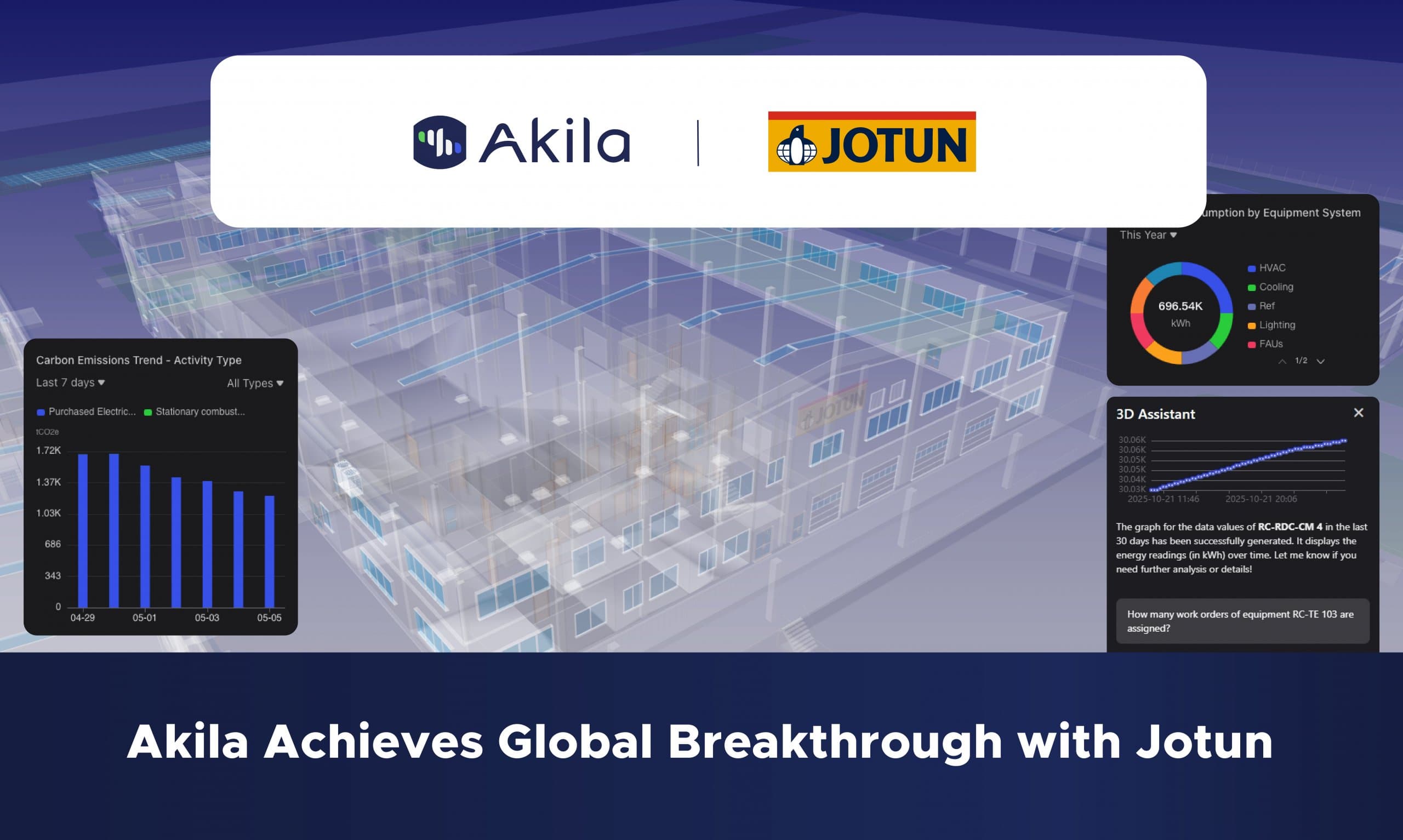
Jotun, the global paints and coatings manufacturer operating in more than 100 countries, has selected Akila to deploy an AI-driven energy platform across its worldwide manufacturing portfolio.

Akila is proud to announce a strategic partnership with Jotun Group to deploy a unified energy-intelligence layer across Jotun’s production facilities worldwide. Headquartered in Norway and recognized as a leading manufacturer in its sector, Jotun operates extensive industrial sites across Europe, the Middle East, Africa, South East Asia & Pacific, North East Asia, Latin America and the Americas.

This program represents one of the most significant global energy-intelligence initiatives undertaken by Akila to date, establishing asset-level monitoring and portfolio-wide optimization from the outset—and positioning Jotun to unlock measurable savings across its global network.


Transforming Industrial Energy Management Across a Global Portfolio

Akila’s AI energy platform will integrate with Jotun’s existing metering and control infrastructure, while working with Jotun to add and integrate new sensors and gateways as required to reinforce and expand their data-capture infrastructure. All data—whether from existing or supplemental sources—will be unified within a single platform serving as the energy-intelligence layer across the portfolio.

The platform will deliver a unified data model for all energy-related insight, enabling Jotun to:

  • Monitor electricity, energy quality, HVAC performance, compressed air, natural gas and other utilities across critical production assets
  • Detect significant energy users and anomalies early and at scale
  • Benchmark and optimize performance across regions, facilities and processes
  • Reduce energy waste and improve operational efficiency across Scope 1 and Scope 2
  • Track carbon footprints and align decisions with sustainability targets
  • Apply AI-driven analytics for deviation detection, automated baseline comparison and actionable optimization recommendations

This unified approach ensures that operational teams gain consistent, portfolio-wide intelligence capable of driving targeted improvements and measurable cost reductions.


Accelerating Impact With Actionable Insight

Rapid deployment is central to this program. With Akila’s platform architecture, Jotun will begin receiving actionable insight within the first three months—enabling teams to identify savings opportunities quickly and apply corrective actions across the portfolio.

Historically, similar deployments have generated measurable savings of 3–5%, and this program aims to replicate and further improve energy savings across Jotun’s global manufacturing network.


A Milestone in Akila’s Portfolio-Level Vision

“Partnering with Jotun at this scale is a defining moment for Akila,” said Philippe Obry, Vice President, Akila. “This is exactly what the Akila platform was built for—centralizing industrial data at the global portfolio level to unlock advanced analytics, benchmarking and a clear pathway toward AI-driven optimization and asset performance.”


A Shared Commitment to Efficiency and Sustainability

“We selected Akila because their platform met our rigorous technical and safety requirements and demonstrated the transparency and collaboration we value,” said Trine Finnevolden, Group Technical Director HSEQ at Jotun. “This partnership will enable us to unlock new levels of energy performance, operational insight, and sustainability across our global manufacturing network.”

Akila is proud to support Jotun’s leadership in energy efficiency, operational excellence and sustainable industrial growth—setting a new benchmark for AI-led energy management across a global portfolio.

Related Articles
Akila delivers digitalized energy management for Kewpie

Akila delivers digitalized energy management for Kewpie

Schlumberger Indonesia uses Akila Asset to digitalize maintenance management

Schlumberger Indonesia uses Akila Asset to digitalize maintenance management

Eliminating greenwashing with data, IoT, and digital twins

Eliminating greenwashing with data, IoT, and digital twins

Take the next step with Akila

If you want better from your buildings, our team is here to help. Let’s set up a call to discuss your needs and show you how Akila works, from deploying digital infrastructure to optimization.

910-Product-page
Secondary ~ Request Demo Simple

Akila and FPT Welcome Hauts-de-France Delegation in Tokyo to Strengthen Franco-Japanese Partnerships in Digital Transformation

September 29, 2025
Related Articles
Asset SUITE: empowering technical teams, extending asset lifespans

Asset SUITE: empowering technical teams, extending asset lifespans

Akila and BizzTech Partner to Accelerate Physical AI for Smart Cities and the Built Environment

Akila and BizzTech Partner to Accelerate Physical AI for Smart Cities and the Built Environment

Akila Names Maud Demurge as Head of Akila Americas

Akila Names Maud Demurge as Head of Akila Americas

Take the next step with Akila

If you want better from your buildings, our team is here to help. Let’s set up a call to discuss your needs and show you how Akila works, from deploying digital infrastructure to optimization.

910-Product-page
Secondary ~ Request Demo Simple

 Akila at the AI-xperience Forum in Amsterdam

September 28, 2025
Related Articles
Feature focus: Akila Energy Savings Tracker

Feature focus: Akila Energy Savings Tracker

HVAC and IEQ: The Hidden Backbone of Global Logistics 

HVAC and IEQ: The Hidden Backbone of Global Logistics 

Bridging Academia and Innovation: Welcoming Université Paris Dauphine Students to Akila

Bridging Academia and Innovation: Welcoming Université Paris Dauphine Students to Akila

Take the next step with Akila

If you want better from your buildings, our team is here to help. Let’s set up a call to discuss your needs and show you how Akila works, from deploying digital infrastructure to optimization.

910-Product-page
Secondary ~ Request Demo Simple

Unlocking HVAC Efficiency: How Smart Control Transforms Building Operations

September 17, 2025

Related Articles
Embodied carbon is a problem. Digital twins can help.

Embodied carbon is a problem. Digital twins can help.

Bolloré Logistics to optimize energy consumption in Songjiang warehouse with Akila digital solution

Bolloré Logistics to optimize energy consumption in Songjiang warehouse with Akila digital solution

Enhancing preventative maintenance: How Akila’s new feature streamlines asset management

Enhancing preventative maintenance: How Akila’s new feature streamlines asset management

Take the next step with Akila

If you want better from your buildings, our team is here to help. Let’s set up a call to discuss your needs and show you how Akila works, from deploying digital infrastructure to optimization.

910-Product-page
Secondary ~ Request Demo Simple

Smarter Lighting, Smarter Buildings: Unlocking Hidden Energy Savings 

September 16, 2025
Related Articles
Embodied carbon is a problem. Digital twins can help.

Embodied carbon is a problem. Digital twins can help.

Akila at WEF Summer Davos: Shaping the Future With AI and Decarbonization 

Akila at WEF Summer Davos: Shaping the Future With AI and Decarbonization 

Feature focus: ESG Dashboard

Feature focus: ESG Dashboard

Take the next step with Akila

If you want better from your buildings, our team is here to help. Let’s set up a call to discuss your needs and show you how Akila works, from deploying digital infrastructure to optimization.

910-Product-page
Secondary ~ Request Demo Simple

Akila Expands R&D Hub in Vietnam to Drive AI-Powered Cognitive Buildings

March 12, 2025

This month marks a major milestone for Akila as our R&D team in Vietnam moves into a new, expanded location in Hanoi. Established in 2023, this hub has rapidly become a driving force behind our AI innovation, pushing the boundaries of smart building technology.

With the rapid urbanization of cities across the world, the demand for intelligent, data-driven real estate solutions is greater than ever. At Akila, we are shaping the future of Cognitive Buildings, leveraging cutting-edge AI and strategic partnerships – such as our collaboration with NVIDIA, to accelerate the transformation of the built environment.

Why Vietnam? A growing hub for AI innovation

Vietnam’s thriving tech ecosystem, highly skilled talent pool, and strong government support for digital transformation make it an ideal location for an R&D hub dedicated to AI and real estate technology. Our team in Hanoi is tackling some of the biggest challenges in the industry, developing solutions that will redefine how real estate portfolios are managed worldwide.

Pioneering AI-driven real estate intelligence

Our Vietnam R&D team is at the forefront of several key AI initiatives that will shape the next generation of smart buildings:

  • Generative AI & Large Language Models (LLMs) – We are integrating generative AI and LLMs into Akila’s platform to create a truly unified real estate data ecosystem. This enables users to access real-time insights through natural language queries, making data-driven decision-making faster and more intuitive.
  • Advanced real-time simulations – We are developing AI-powered simulations that optimize critical building performance factors, including airflow, thermal comfort, lighting efficiency, and human traffic patterns. These simulations help property owners enhance energy efficiency and occupant experience while reducing operational costs.
  • Scaling AI for district-wide optimization – Beyond individual buildings, our AI-driven solutions are expanding to entire urban districts. By simulating and analyzing real estate data on a city-wide scale, we can optimize energy use, sustainability performance, and operational efficiency across multiple properties.

Building the future of smart real estate

Our vision is to transform the real estate industry by making every building a Cognitive Building—one that continuously learns, adapts, and optimizes its operations using AI. The work being done in our Vietnam R&D hub is a crucial part of this mission, driving scalable, AI-powered solutions that redefine how we interact with the built environment.

As we continue to expand our R&D capabilities, we invite innovators, technologists, and partners to join us on this journey. If you’re in Hanoi, stop by and say hello—we’d love to connect and share more about the exciting work happening at Akila.

For a more detailed breakdown of how AI can be used to enhance the building lifecycle, check out this blog post.

Related Articles
세계경제포럼이 Akila 를 2022 년 기술선도기업으로 선정하다

세계경제포럼이 Akila 를 2022 년 기술선도기업으로 선정하다

Akila and Dassault Systèmes Announce Virtual Twin-Based Cooperation for the Built Environment ESG Performance

Akila and Dassault Systèmes Announce Virtual Twin-Based Cooperation for the Built Environment ESG Performance

AI-Enhanced Carbon Footprint Tracking for Corporate ESG Goals

AI-Enhanced Carbon Footprint Tracking for Corporate ESG Goals

Take the next step with Akila

If you want better from your buildings, our team is here to help. Let’s set up a call to discuss your needs and show you how Akila works, from deploying digital infrastructure to optimization.

910-Product-page
Secondary ~ Request Demo Simple

Decarbonizing heavy industry: AI-Driven solutions

October 08, 2024

Heavy industry is a key of the global economy, but it is also a major contributor to carbon emissions: its direct CO2 emissions amount is around 6 billion tonnes per year, meaning more than one-sixth of total CO2 emissions from the global energy system. The pressure for heavy industry to decarbonize and adopt more sustainable practices has become an emergency, not only for regulatory necessities, but also because it represents an opportunity to enhance their operational efficiency and reduce their costs.

Known to be one of the most challenging industries to decarbonize, heavy industry has been unsuccessful to lower their carbon emissions efficiently. In this context, Artificial Intelligence (AI) has become a game-changing tool in the move towards decarbonization and represents a promising way towards sustainability.

New AI-driven solutions can allow the industry to rethink their way of working by helping optimize energy consumption, improve predictive maintenance, but also to significantly reduce carbon footprints.

One of the main uses of AI is for predictive maintenance, where AI monitors the health of industrial assets in real time, detecting potential issues early and allowing for proactive repairs. In this case, AI could prevent unexpected breakdowns, reduces downtime, and minimizes energy waste caused by inefficient or faulty equipment.

AI can also play a significant role in energy consumption optimization: by analyzing vast amounts of data from operations, AI algorithms can identify real-time efficiency opportunities, enabling companies to fine-tune their energy use, reducing unnecessary consumption and associated emissions.


AI-driven solutions for reducing emissions

Artificial Intelligence (AI) is revolutionizing all industries by offering new and more efficient ways to work.

In heavy industry, AI has the potential to help with the decarbonization challenge: it offers new innovative solutions to tackle it, by reducing emissions in the industry while still allowing to optimize operations and cut energy waste at the same time:

Predictive maintenance:

AI can play an important role in monitoring equipment’s health: with the help of sensors and data, AI can predict when an asset is most likely to stop working or become less efficient. This proactive approach prevents energy waste by ensuring systems are operating efficiently and avoiding unplanned downtime. In the case of heavy industry, which relies on complex systems, AI can help optimize the maintenance schedule of equipment and ensure they perform at their best.

Energy consumption optimization:

By analyzing real-time energy usage patterns of equipment, AI can identify inefficiencies or opportunities to minimize waste. Unlike human controlled systems, AI continuously learns and adapts, not only it can recommend adjustments for heating, cooling or material handling, but it can also ensure that the energy usage is optimal according to the needs of a facility and therefore contributes to emissions reductions.

Supply chain emission reduction:

AI can also help optimize logistics by improving route planning or even selecting the most efficient transportation modes reducing fuel consumption in the transportation of materials. Additionally, AI can help companies source more sustainable materials and improve supply chain transparency, identifying emission hotspots and enabling better decision-making to reduce their overall carbon footprint.


Akila’s AI-driven platform

Akila’s AI-powered platform, combined with IoT, offers heavy industries a comprehensive solution for reducing emissions and optimizing energy consumption through digital twin technology.

Real-time monitoring:

With the help of IoT sensors, Akila can continuously track emissions in real-time but also your energy usage. This allows companies to quickly identify issues and address them, such as equipment underperformance, but also to reduce their CO2 emissions.

Data-driven insights:

Akila’s platform analyzes vast amounts of operational data to uncover inefficiencies and suggest optimizations. By analyzing energy use, the platform can recommend adjustments, like improving heating and cooling systems, improving operational efficiency of companies.

Predictive forecasting:

By using AI to predict future energy needs, Akila can anticipate and manage demand more efficiently. But this proactive approach mainly helps prevent energy waste and reduces the strain on equipment, further cutting emissions with the use of the digital twin technology.


Challenges and future outlook

If AI’s future in heavy industry and to help for decarbonization is bright, its adoption can face barriers: as we know, legacy systems often lack compatibility with modern AI solutions, making upgrades more expensive and harder to implement.

With the crucial need for heavy industry to meet sustainability goals, AI seem to become a solution in driving green innovations as it could accelerate industries’ decarbonization efforts while still improving its operational efficiency.

However, the investment required for AI driven solution to be implemented could allow organizations to make substantial cost savings and significant environmental impact makes it a necessary step toward a sustainable future. By embracing AI, heavy industry can not only meet its sustainability goals but also pave the way for a greener, more efficient tomorrow.

AI’s potential to help with decarbonization goes beyond heavy industry: combined with other sectors, such as the construction or building management. By integrating AI across those different industries, it opens new ways to decarbonization and sustainability. Learn more about AI’s role with Akila in the building lifecycle here.

Related Articles
Embodied carbon is a problem. Digital twins can help.

Embodied carbon is a problem. Digital twins can help.

Akila Institutions: Fudan – MIT China Lab

Akila Institutions: Fudan – MIT China Lab

Energy SUITE: dedicated tools for decarbonization

Energy SUITE: dedicated tools for decarbonization

Take the next step with Akila

If you want better from your buildings, our team is here to help. Let’s set up a call to discuss your needs and show you how Akila works, from deploying digital infrastructure to optimization.

910-Product-page
Secondary ~ Request Demo Simple

Akila Mobile is now available on iOS and Android

September 26, 2024

Exciting news! We are thrilled to announce that the new Akila Mobile is available on iOS and Android.

Set to transform and optimize building management, the app will also bring unparalleled efficiency and insight to building operations.  It will provide you with a centralized platform to manage work orders, inspections and maintenance operations, track equipment status and health and stay on top of asset management, all from the convenience of your device.

Akila Mobile is a key achievement in our quest to innovate facility maintenance management and empower teams with real-time data.

Here are some of its key features:

  • Streamlined workflow: Easily create, assign, and track work orders and inspections.
  • Real-time updates: Stay informed with instant notifications and status updates.
  • Offline functionality: Continue working seamlessly, even without an internet connection.
  • Meter reading integration: Accurately record and monitor utility consumption data.

Facility managers gain unprecedented insights and control:

  • Auditable records: Access detailed logs of all activities, ensuring accountability and compliance.
  • Enhanced collaboration: Foster teamwork and communication with a shared platform.
  • Improved efficiency: Identify bottlenecks and streamline processes to boost overall performance.

How to get the App?

Join the future of facility management and download the Akila App on the App Store/Google Play now. Simply search for Akila Mobile and click ‘Download’ to get started.

Stay tuned for more updates and feature enhancements.

For more information, visit our website or contact our support team. We’re here to help you make the most of your building’s potential.


Related Articles
Scope 3 emissions: challenges and solutions

Scope 3 emissions: challenges and solutions

Managing the electricity impact of EV charging on buildings

Managing the electricity impact of EV charging on buildings

Akila partners with STACS ESGpedia to facilitate green financing

Akila partners with STACS ESGpedia to facilitate green financing

Take the next step with Akila

If you want better from your buildings, our team is here to help. Let’s set up a call to discuss your needs and show you how Akila works, from deploying digital infrastructure to optimization.

910-Product-page
Secondary ~ Request Demo Simple

Introduction to building automation

September 20, 2024

Building automation has come a very long way over the years, leading to what we now refer to as “smart building” technology. Smart buildings leverage a whole range of technology solutions such as Building Management Systems (BMS) / Building Automation Systems (BAS), Energy Management Systems (EMS), Computerized Maintenance Management Systems (CMMS), Integrated Working Management Systems and more to make the day-to-day operation of facilities more efficient.

These systems have revolutionized the operation of facilities by providing enhanced control, reducing waste, improving data quality, and optimizing operations and costs.

In the heart of this evolution, Akila stands out as an all-in-one digital twin data platform for buildings. It integrates every system and sub-system into a single source, eliminating silos and contextualizing each part, process, and performance to the entire building.

Unlike typical BMS and EMS software, the Akila digital twin is designed to work with a wide range of hardware, offering greater flexibility and customization. This complete approach ensures that all aspects of building management are seamlessly integrated, providing a comprehensive and efficient solution for modern smart buildings.

Let’s break it down by each different system to see where Akila excels versus traditional tech.


Building Management System (BMS)

Energy Management System (EMS)

Computerized Maintenance Management Systems (CMMS)

Integrated Workplace Management Systems (IWMS)


Traditional building management systems

In today’s increasingly interconnected world, the efficient management of building operations and energy consumption is more critical than ever. Various systems have been developed to address these needs, each offering unique capabilities and benefits. The four key technologies—Building Management Systems (BMS), Energy Management Systems (EMS), Computerized Maintenance Management Systems (CMMS), and Integrated Workplace Management Systems (IWMS)— play a vital role in optimizing building performance and resource utilization.

These technologies have been shaping the landscape of building and energy management, paving the way for smarter, more sustainable, and highly efficient operational practices. Here is how they work and their benefits:

BMS (Building Management System)

A BMS (also known as BAS or BCS) is a computer-based control system installed in buildings that control and monitors different systems in a building. The BMS system typically integrates multiple systems such as heating, ventilation, air conditioning, lighting, and security into a unified system. This centralized control allows for efficient management of the building’s energy consumption, improves the indoor environment, and helps to ensure the safety of the building’s occupants.

EMS (Energy Management System)

An EMS is a software platform that monitors and controls an organization’s energy usage. The EMS allows organizations to track their energy consumption, identify areas for improvement, and implement energy-saving strategies. The system can integrate with various building systems, such as lighting and HVAC, to provide a comprehensive view of energy usage.

The best use of an EMS is to monitor systems and identify anomalies in energy use. An EMS can identify where and how energy is being wasted. It can measure energy use against a baseline and alert operators when it goes off track. It can also simulate energy use in different scenarios to help with planning operations or projects.

CMMS (Computerized Maintenance Management System)

A CMMS is a software application used to manage maintenance operations and track equipment maintenance. The system provides a centralized database to store maintenance records, schedules, and history and enables the efficient planning and execution of maintenance tasks. CMMS can automate tasks such as work order generation, scheduling, and resource allocation, and can generate reports to provide valuable insights into maintenance operations.

By reducing manual processes and providing real-time data on maintenance activities’ status, CMMS can help organizations improve equipment reliability, reduce downtime, and lower maintenance costs. Additionally, CMMS can help organizations comply with industry regulations and standards, such as OSHA, by providing a clear record of maintenance activities.

IWMS (Integrated Workplace Management System)

An IWMS is a comprehensive software platform that helps organizations optimize their workplace facilities, including real estate, infrastructure and facilities management. IWMS integrates various modules such as space, property, maintenance and sustainability management into one platform. This integration allows for better decision making, increased operational efficiency and better alignment with organizational goals. By providing a complete view of workplace management, IWMS helps organizations to boost productivity, reduce costs and create a more sustainable and efficient work environment.

But the field of building and energy management systems is rapidly evolving, driven by emerging technologies.

Innovation in Building and Energy Management Systems

New technologies like IoT, open APIs, cloud-based storage, artificial intelligence (AI) and machine learning (ML) are also improving the way buildings are managed and maintained:

  • IoT: IoT devices enable real-time monitoring and control of building systems, providing detailed insights into operational performance and energy consumption.
  • API Integrations: Open API integrations facilitate seamless connectivity between different systems and platforms, enhancing interoperability and data sharing.
  • Cloud-Based Storage: Cloud-based storage solutions offer scalable and secure data management, allowing for remote access and real-time analytics.
  • AI and Machine Learning: AI and ML algorithms analyze vast amounts of data to identify patterns, predict maintenance needs, and optimize energy usage, leading to smarter decision-making and increased efficiency.

These innovations are revolutionizing building operations management, driving efficiency, sustainability, and enhanced performance across the industry.


What is Akila?

Akila is bigger than any individual system. It is an all-in-one digital twin data platform for buildings designed to unify and streamline your organization’s operations data. It consolidates real-time data from buildings using IoT sensors or open API integrations, offering a complete view for monitoring and optimizing operations. Akila excels in analyzing building metrics and visualizing performance, enabling you to share insights with both internal and external stakeholders.

Akila’s interoperability and extensibility allow seamless integration with existing and future systems, making it a single source of truth for your building management needs. Furthermore, Akila can go beyond just linking all systems at the individual building level to include an entire property portfolio in the same platform. The level of deep data and scalable deployment provided by Akila is what our customers leverage to optimize ESG performance.

Our platform allows you to monitor, track, and analyze utility usage, providing a deep understanding of resource consumption. By identifying inefficiencies in energy-intensive systems like HVAC, Akila helps you optimize these systems to reduce costs and carbon emissions. With advanced analytical tools, benchmarking, and forecasting capabilities, Akila supports informed decision-making through meaningful interactions with data.

Akila solutions VS traditional systems

Akila VS BMS

Akila brings in the functionality of a BMS and goes even further beyond. We build upon the useful features of a BMS and pair them with a full-picture system that includes more in-depth looks at the inter-relation of different systems and the operations surrounding them. Akila then leverages this BMS data to help businesses meet their sustainability, efficiency, and ESG goals.

For example, when Akila was deployed in a multi-site project for Ikea China, the existing buildings were already using a BMS. These were integrated into the Akila platform, where the data was centralized along with other sub-system data to provide a full-picture look at the site’s performance. Using Akila as a single source of truth led to improved efficiency and a resulting reduction in energy use.

Akila VS EMS

Akila can also provide all the functions of an EMS through just one software suite: Akila Energy. We integrate with EMS systems and provide value added analytics and normalization on top with the Energy SUITE. Akila Energy then works in tandem with other software and hardware (such as BMS and maintenance functions) to provide energy-specific data relating to equipment and operations. This also includes micro-grid assets, such as on-site solar panels and energy storage batteries.

One of the most important energy-related features of Akila is the ability to track energy savings and measure greenhouse gas impact based on Scope 1, 2, and 3 emissions categories. This information is critical when it comes to ESG reporting. Akila allows our customers to use the time normally spent on collecting data to act on improving their emissions impact.

Akila VS CMMS

With our maintenance suite, Akila can be used as a CMMS. The maintenance suite is designed to maintain asset registers and related maintenance plans, technical history, and inspection records. It is more lightweight, making it more interoperable with other heavier systems.

In the maintenance sphere, Akila is designed for practical usage, compliance, and direct work feedback from technicians (via the Akila App). By leveraging data captured from other software modules, third-party monitoring systems, and predictive algorithms (within Akila or from our partner ecosystem), the maintenance program can be adjusted in near real time to the actual condition of the built environment and its usage.

Akila VS IWMS

With Workspace, Akila helps you manage your facility’s soft services, enhancing both efficiency and service quality in areas such as cleaning, security, and environmental management. It provides a centralized solution for work order, service requests, and inspections all in one place but it also allows you to track and manage Inventory. Our Workspace suite also includes Indoor Environmental Quality (IEQ) monitoring to ensure a healthy environment. With powerful analytics and automated alerts for operational anomalies, Akila enables real-time service request management and offers a mobile app for seamless on-site task coordination. This results in improved operational efficiency, greater transparency through digitalized service records, and complete traceability of customer service requests.


The Akila platform encompasses all the systems mentioned above. It exists vertically above all of them – not adjacent to them. It’s key advantage is to be integrating all building management systems into a single, unified solution unlike traditional systems. By consolidating data from various sources into its platform, Akila allows you more transparency and makes reporting more efficient while still reducing costs and minimizing environmental impact.

By serving as a single source of truth, Akila breaks down operational barriers, enabling stakeholders to manage processes and data more effectively. The platform’s true potential is realized when managing an entire property portfolio, providing company leaders with real-time visibility into performance across buildings, regions, and even global operations. With investment-grade data available for ESG and compliance reporting, Akila gives stakeholders and decision-makers the tools to make informed decisions that drive sustainability and efficiency.


If you are interested and want to see how Akila can revolutionize your building operations and drive greater efficiency, sustainability, and transparency, register for a demo today  !

Related Articles
Meet Akila: Cynthia Yuan, Head of Digital Engineering

Meet Akila: Cynthia Yuan, Head of Digital Engineering

Akila Named Global Energy-Management Partner for Jotun Group — Deploying AI Energy Platform Across 26 Countries

Akila Named Global Energy-Management Partner for Jotun Group — Deploying AI Energy Platform Across 26 Countries

Akila Joins NVIDIA Partner Network: Advancing AI-Native Digital Twins 

Akila Joins NVIDIA Partner Network: Advancing AI-Native Digital Twins 

Take the next step with Akila

If you want better from your buildings, our team is here to help. Let’s set up a call to discuss your needs and show you how Akila works, from deploying digital infrastructure to optimization.

910-Product-page
Secondary ~ Request Demo Simple

Get ENERGY STAR certification for your building

September 09, 2024

What is ENERGY STAR Certification?

ENERGY STAR is one of the most trusted environmental labels in the USA, recognized by nearly 90% of American households. Administered by the U.S. Environmental Protection Agency (EPA), ENERGY STAR certification recognizes buildings and products that meet strict energy efficiency standards. ENERGY STAR certification demonstrates organizations’ commitment to saving energy, cutting costs, and protecting the environment.


Why does ENERGY STAR Certification matter for buildings?

Buildings can earn ENERGY STAR certification by using less energy, saving money on utility bills, and helping to reduce greenhouse gas emissions. To earn this certification, a building must score 75 or higher on the EPA’s 1-100 ENERGY STAR Score, which means that the building performs better than at least 75% of similar buildings nationwide.

This score is calculated based on actual energy use using the EPA’s ENERGY STAR Portfolio Manager tool. The tool takes into account factors such as operating conditions and regional weather data. This ensures an accurate assessment of a building’s energy efficiency.

How to obtain and verify your ENERGY STAR Certification?

This year, the deadline for certification of U.S. commercial buildings in 2024 is Friday, December 13th.

ENERGY STAR certification is not a one-off achievement, it is an annual recognition. The building must maintain its high energy performance each year to maintain certification. The certification application also needs to be reviewed by a licensed Professional Engineer (PE) or Registered Architect (RA) to ensure all data is accurate.


If you wish to obtain your certification, follow the next steps:

  1. Evaluate your building’s energy performance:

Start by determining your building’s ENERGY STAR score. If you’re new to this process, you can learn more about benchmarking in the Portfolio Manager section of the ENERGY STAR website. You should aim for a score of 75 or higher.

  1. Submit your application using Portfolio Manager:

If you have a qualifying score, the next step is to apply using Portfolio Manager. Follow the step-by-step instructions on the ENERGY STAR website.

  1. Get your application verified:

The last step is to have your application verified by a licensed PE or RA. They will confirm your building’s characteristics, energy data, and that all indoor environmental criteria have been met. The cost of verification varies, but it’s typically around $1,500 for an average building. You can search the ENERGY STAR list of licensed professionals or hire someone in-house.

ENERGY STAR certified buildings not only demonstrate energy efficiency, but it also contribute to a more sustainable future.

Visit the ENERGY STAR website to learn more about improving your building’s energy performance and applying for certification.

Related Articles
The role of Building Management Systems in improving occupants’ safety

The role of Building Management Systems in improving occupants’ safety

Embodied carbon is a problem. Digital twins can help.

Embodied carbon is a problem. Digital twins can help.

Digital twins for the built environment

Digital twins for the built environment

Take the next step with Akila

If you want better from your buildings, our team is here to help. Let’s set up a call to discuss your needs and show you how Akila works, from deploying digital infrastructure to optimization.

910-Product-page
Secondary ~ Request Demo Simple