When people think about energy inefficiency in buildings, they usually picture aging equipment, poor insulation, or inefficient HVAC systems.
But a surprising amount of waste comes from something much simpler: Systems operating when nobody needs them. Lights left on overnight. HVAC serving empty zones. Equipment continuing to run long after occupants have gone home. Across a single building, these issues can seem minor. Across an entire portfolio, they quietly become a significant operational and financial burden.
The problem is that most organizations don’t actually lack energy data. They lack visibility into operational context.
A dashboard might show rising consumption overnight, but that doesn’t immediately answer the important questions: Was the building occupied? Was this expected? Which systems were responsible? Was the increase operationally necessary or simply overlooked?
Without context, energy data becomes difficult to act on.
Why After-Hours Consumption Is So Difficult to Manage
Modern buildings generate enormous amounts of operational data. Meters, BMS platforms, IoT devices, and utility systems continuously collect information across lighting, HVAC, plug loads, and equipment.
Yet many facility and operations teams still rely on manual review processes to identify inefficiencies.
That creates several challenges. First, after-hours inefficiencies are often gradual rather than dramatic. A single AHU running longer than necessary may not trigger alarms. Lighting left active in low-traffic areas may go unnoticed for months. Individually, these issues appear small. Together, they create persistent energy waste. Second, operational exceptions are common. Cleaning crews, late-night production shifts, maintenance activities, and special events all create legitimate reasons for buildings to consume energy outside standard schedules. That makes it difficult to distinguish between acceptable usage and avoidable waste. Third, portfolio scale changes everything.
An issue that seems insignificant in one building becomes expensive when repeated across dozens or hundreds of sites. Many organizations simply do not have the resources to manually investigate every irregular energy pattern across their portfolios.
As a result, inefficiencies remain hidden in plain sight.
The Operational Impact Beyond Energy Costs
The financial impact of unnecessary energy consumption is already significant, especially as utility prices continue to fluctuate globally. But the consequences extend beyond electricity bills.
Persistent after-hours operation can increase equipment runtime unnecessarily, accelerating wear on HVAC systems, lighting infrastructure, and other assets. Longer runtimes often translate into higher maintenance requirements and shorter equipment lifecycles.
There is also a sustainability impact. Many organizations now operate under internal ESG targets, carbon reduction commitments, or regulatory reporting requirements. Unnecessary energy consumption directly affects emissions performance and can undermine broader sustainability initiatives.
Perhaps most importantly, unnoticed inefficiencies create operational blind spots.
If teams do not clearly understand when buildings are consuming energy and why, optimization becomes reactive rather than strategic.
Expanding Akila’s AI Insights Reports
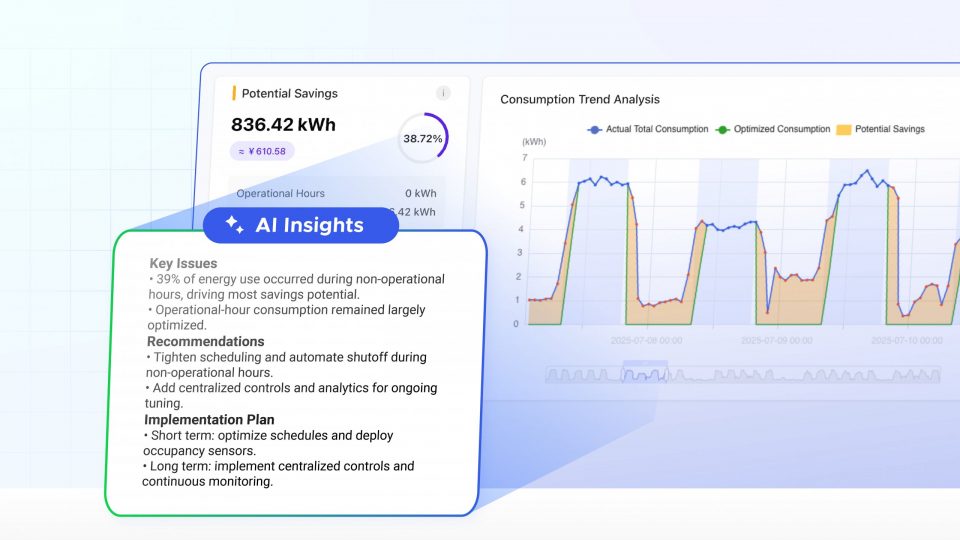
To address this challenge, Akila has introduced a new capability within its AI Insights Reports feature focused on operational versus non-operational energy consumption. The feature analyzes energy usage patterns across building systems such as lighting, HVAC, and connected equipment, then compares consumption behavior against defined operational schedules.
The goal is straightforward: Help teams quickly understand what is happening outside operating hours and determine whether it is justified.
The system identifies:
- Energy consumption during non-operational hours
- Abnormal usage patterns
- Systems operating beyond expected schedules
- Potential areas for optimization
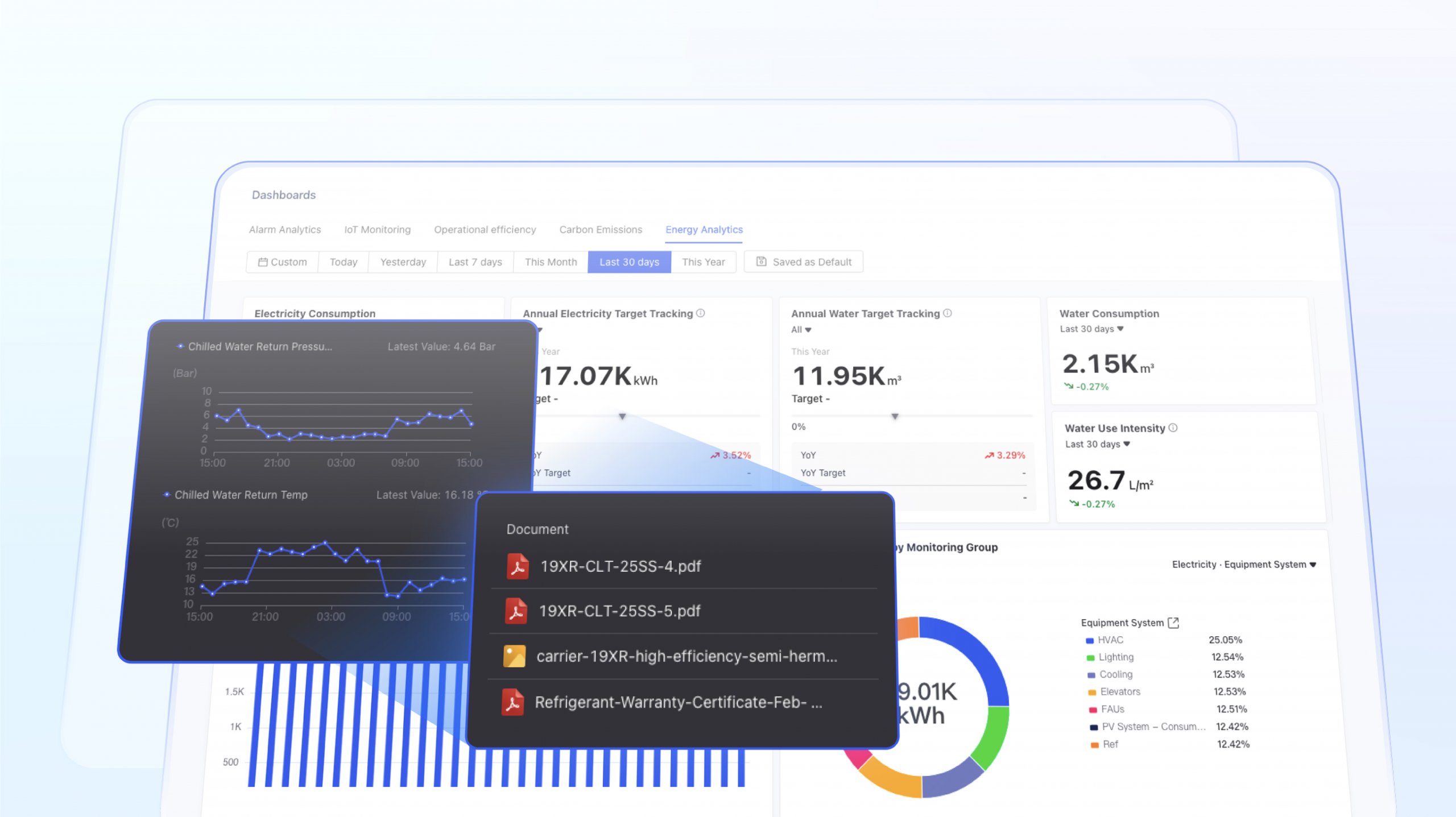
Alongside visual energy trends and operational-hour breakdowns, the platform also generates AI-based written analysis that summarizes findings, highlights areas of concern, and recommends potential next steps.
Rather than requiring teams to manually interpret raw data, the feature helps convert consumption patterns into operational insight.
Turning Data Into Action
One of the biggest challenges in energy management is not identifying that waste exists. It is understanding where to start. A building may have thousands of data points and dozens of integrated systems, but operations teams still need practical guidance.
That is where contextual analysis becomes valuable.
Instead of simply flagging elevated overnight consumption, Akila’s AI Insights Reports can suggest operational adjustments such as:
- Revising schedules
- Introducing occupancy-based controls
- Investigating zones with persistent after-hours activity
- Improving shutdown procedures
- Deploying additional metering or controls where visibility is limited
The intent is not to replace facility teams or automate decision-making blindly, but to help teams prioritize attention faster and make operational reviews more scalable across large portfolios.
Visibility Before Optimization
Not all after-hours energy consumption is waste. Hospitals, factories, logistics hubs, laboratories, hotels, and many other facilities operate beyond traditional business hours. Even office environments frequently have exceptions tied to cleaning, maintenance, or overtime work.
That is why visibility matters more than assumptions. Effective optimization starts with understanding what is happening, where it is happening, and whether it aligns with operational intent.
For many organizations, that level of awareness has historically been difficult to achieve consistently across large building portfolios. By combining operational context, energy analytics, and AI-generated interpretation, Akila helps make those hidden patterns easier to see and easier to act on.
Sometimes the biggest opportunities are not hidden in major capital upgrades. Sometimes they are simply the systems still running after everyone has gone home.