Most building retrofit decisions start the same way: a vendor quotes projected savings, a facilities team estimates payback, and the project gets approved or shelved based on a model that has never been checked against reality.
That model might be right. It might also be off by a factor of two, and no one finds out until the retrofit is already installed and the actual utility bills start coming in. By then, the capital is spent.
Scenario planning is the alternative: testing a retrofit case against real site data before committing, and continuing to check it against actual performance after. It changes two things about how these decisions get made, and both matter more than the retrofit itself.
The First Question Isn’t “How Much Will We Save”
It’s “does this space need the work at all.”
Portfolios are uneven. A parking structure running fluorescent tubes 24 hours a day is a very different investment case than a conference room used four hours a week. Industry-average savings estimates flatten that difference out. Scenario planning doesn’t.
Run the case against a building’s actual consumption baseline, current asset condition, and real usage patterns, and some zones will clearly justify the spend. Others won’t, at least not yet. That’s a more useful answer than a portfolio-wide retrofit mandate built on averages, because it tells a facilities team where capital actually moves the number, and where it doesn’t.
This is the part that gets skipped most often. Retrofit proposals tend to assume the retrofit is the right call and jump straight to sizing it. Scenario planning puts the “should we” question before the “how much,” which is where it belongs.
Projections vs. Metered Reality
The second shift is what happens after the investment decision is made.
A typical retrofit business case is built once, at the proposal stage, using estimated consumption and assumed savings rates. It rarely gets revisited. Once the fixtures are in the ceiling, nobody goes back to check whether the model held up.
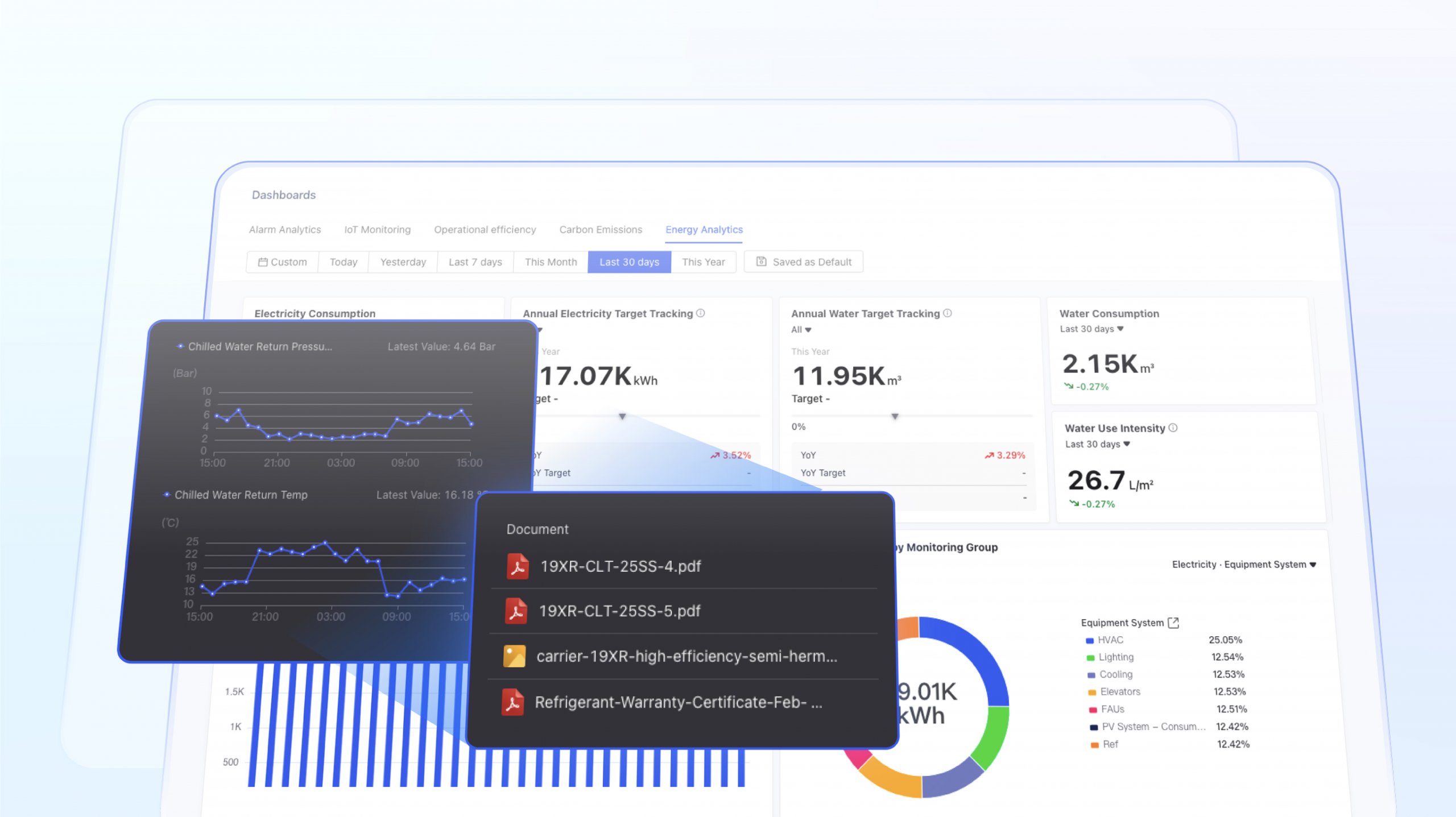
Scenario planning treats that model as a starting point, not a conclusion. Actual consumption data, metered after the retrofit goes live, replaces the estimate. That’s a meaningfully different conversation with finance: instead of “this should pay back in three years,” it becomes “here’s what the meters are showing, and here’s the actual payback trajectory.”
A Lighting Retrofit, in Numbers
Lighting is one of the clearer examples, because the before-and-after is easy to isolate and the payback window is short enough to observe within a year or two.
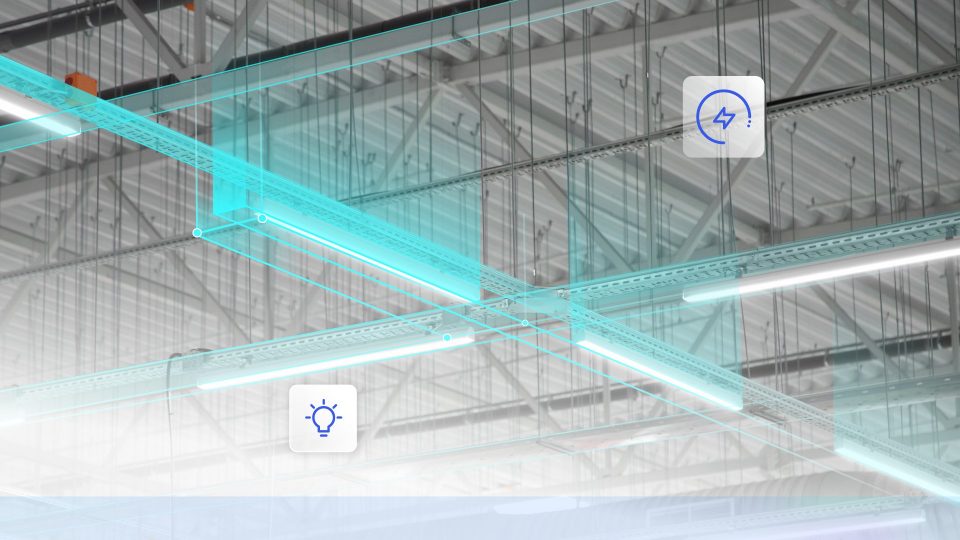
On one LED retrofit Akila supported, covering close to 100 fixtures, the pre-retrofit baseline was established from metered consumption data, not a nameplate estimate. After installation, actual usage was tracked against that baseline rather than a projected savings curve.
The results: close to 69,000 kWh saved within 18 months of going live. The project had paid for itself within the first year, measured against real consumption, not the original projection.
That gap, between what a projection would have said and what the meters actually showed, is the entire argument for scenario planning. A projection is a reasonable starting estimate. It is not a decision-grade number until it’s been checked against something real.
What This Looks Like in Practice
A scenario-planning approach to retrofit decisions generally follows the same sequence, regardless of building type or system:
Establish a real baseline. Not a nameplate rating or an industry average, actual metered consumption for the space in question, ideally over a period long enough to capture normal variation.
Model the retrofit against that baseline. Apply expected efficiency gains to the specific consumption pattern of the space, not a generic per-fixture or per-square-meter assumption.
Rank by return, not by age or visibility. The oldest or most visible system in a portfolio isn’t automatically the best retrofit candidate. The space with the highest waste relative to its baseline usually is.
Verify after installation. Once the retrofit is live, track actual consumption against the pre-retrofit baseline, not against the original projection. This is the step most retrofit programs skip, and it’s the one that turns a one-time capital decision into an ongoing performance record.
Why This Matters Beyond Lighting
Lighting is a useful example because it’s contained and fast to verify, but the same logic applies to HVAC upgrades, building envelope work, or any capital project where the business case depends on future energy performance. The pattern is consistent: decisions made on industry averages tend to either overstate returns on low-waste spaces or understate them on high-waste ones. Decisions grounded in actual site data don’t have that problem, because they start from what the building is actually doing, not what a comparable building is assumed to do.
For portfolio-level teams managing retrofit budgets across dozens or hundreds of sites, that difference compounds. Scenario planning doesn’t just make one retrofit decision more accurate, it changes how the entire capital pipeline gets prioritized, so the projects that get funded first are the ones the data actually supports.
The gap between planning and performance is usually where retrofit ROI goes wrong. Closing it starts with data before the decision is made, and continues with monitoring after the work is done.