Ask a corporate real estate team a simple question: what do we own or occupy, what condition is it in, and what is it actually costing us. In most organizations, the honest answer takes weeks to assemble, and depends heavily on who you ask.
This isn’t a data availability problem. The information exists. Leases specify rent terms and break clauses. Technical surveys document equipment and building condition. Regulatory certificates confirm compliance status. ESG baselines track emissions and energy use. Maintenance logs record what’s been fixed and when. All of it is real, all of it is somewhere.
The problem is that “somewhere” means different systems, different regions, different formats, and often different vendors, with no single place where it connects. A CRE director trying to answer a portfolio-wide question is effectively running a research project every time, pulling files from regional teams, reconciling inconsistent formats, and frequently bringing in outside consultants to fill the gaps.
Why this matters more than it used to
Real estate is typically the second-largest cost line for large occupiers, after payroll. Portfolios are expected to flex with the business: support growth, absorb consolidation, respond to M&A activity, all while regulatory requirements around energy performance and climate risk disclosure continue to tighten. None of that is possible to manage well from static, periodic snapshots.
At the same time, expectations have shifted. Boards increasingly expect real estate decisions to be backed by current, consolidated data, not by an annual survey or a consultant’s best estimate. The gap between what’s expected and what most portfolio data infrastructure can actually deliver has grown wider, not narrower.
What fragmentation actually costs
The practical consequences show up in a few consistent places:
Slower, less confident decisions. Benchmarking one asset against another, or against the market, requires comparable data. Without it, portfolio strategy defaults to whichever site has the most complete file, not necessarily the one that matters most.
Risk coverage gaps. Risk management tends to concentrate on a handful of high-visibility assets while the rest of the portfolio runs on hope. Climate exposure, regulatory deadlines, and lease risk all sit quietly until they become urgent.
Visibility that stops at the site. Operational efficiency and occupancy cost are frequently managed locally, with limited escalation to headquarters. Underperforming sites and effective practices both stay invisible at the level where decisions actually get made.
Dependence on third parties for basic questions. When there’s no internal source of truth, consultants and brokers become the default route to answers the organization should already have about its own assets.
A different starting point
Akila’s approach starts from a straightforward premise: a portfolio’s static and operational data should live in one consolidated model, not scattered across regional silos and consultant deliverables.
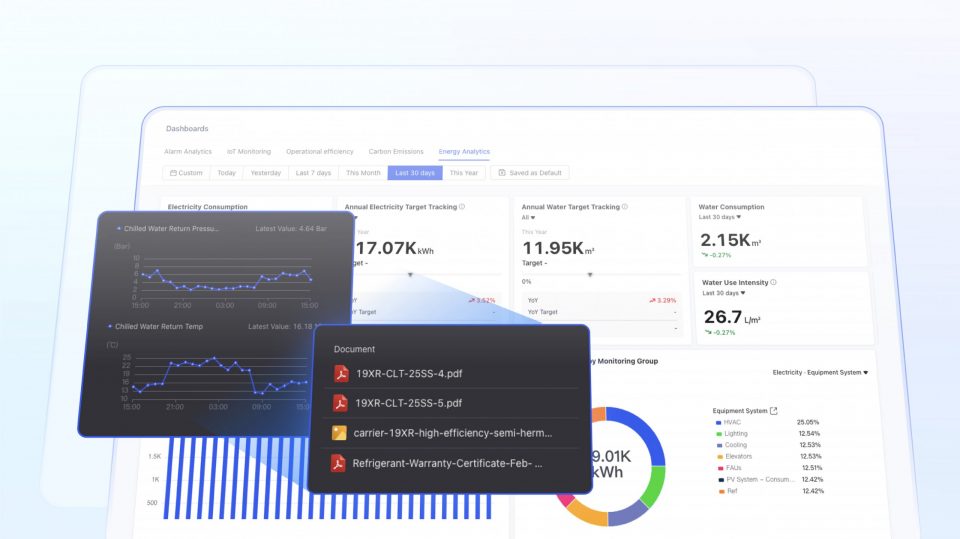
That means bringing together the static record, leases, title and ownership documents, technical specifications, regulatory status, financial history, with the operational layer that changes daily: occupancy levels, energy consumption, maintenance activity, equipment performance. Together, these form a single, queryable view of the portfolio that reflects what’s actually happening, not what was true at the last survey date.
The effect compounds over time. A continuously documented asset, with an unbroken record of condition, maintenance, and operational history, holds a stronger position in disposals, refinancing conversations, and insurance underwriting than a point-in-time snapshot ever can. Every additional data point makes the next decision a little easier to make with confidence.
What this looks like in practice
For one multinational occupier, consolidating lease data into a single accessible model made a concrete difference in a renegotiation. Having clear, current visibility into lease terms and comparable market data going into the conversation contributed to a 5-15% reduction in rent on the renegotiated terms.
That outcome reflects a broader pattern: better data doesn’t just support decisions, it changes the leverage available in them. Across the engagements we’ve supported, the same dynamic shows up in capex prioritization, vendor consolidation, and regulatory compliance tracking. Teams aren’t working harder to get answers, they’re working from a foundation that already has the answers in it.
Building the foundation without the multi-year project
A common objection to consolidating portfolio data is the assumption that it requires a lengthy, resource-intensive overhaul. In practice, the most effective approach is incremental: start with the static, document-based layer of the portfolio (leases, surveys, certificates, financial records), since this delivers value quickly and with lower integration risk than connecting live operational systems.
Public data sources can shorten this further. In markets with strong open data ecosystems, energy performance certificates, property transaction records, zoning and planning data, and environmental risk information are already available before a client submits a single document. This lets a meaningful part of the portfolio picture take shape immediately, with client-provided documentation filling in the remainder.
Once that foundation is in place and stakeholders trust it, extending into the operational layer, real-time energy data, occupancy patterns, automated alerts, becomes a natural next step rather than a separate, harder sell.
The standard worth holding
Real estate’s weight on the balance sheet hasn’t changed. What has changed is how much margin there is for managing it on outdated or incomplete information. A portfolio that can be reliably described, benchmarked, and acted on in real time isn’t a convenience. It’s the baseline that the cost and complexity of modern real estate now requires.